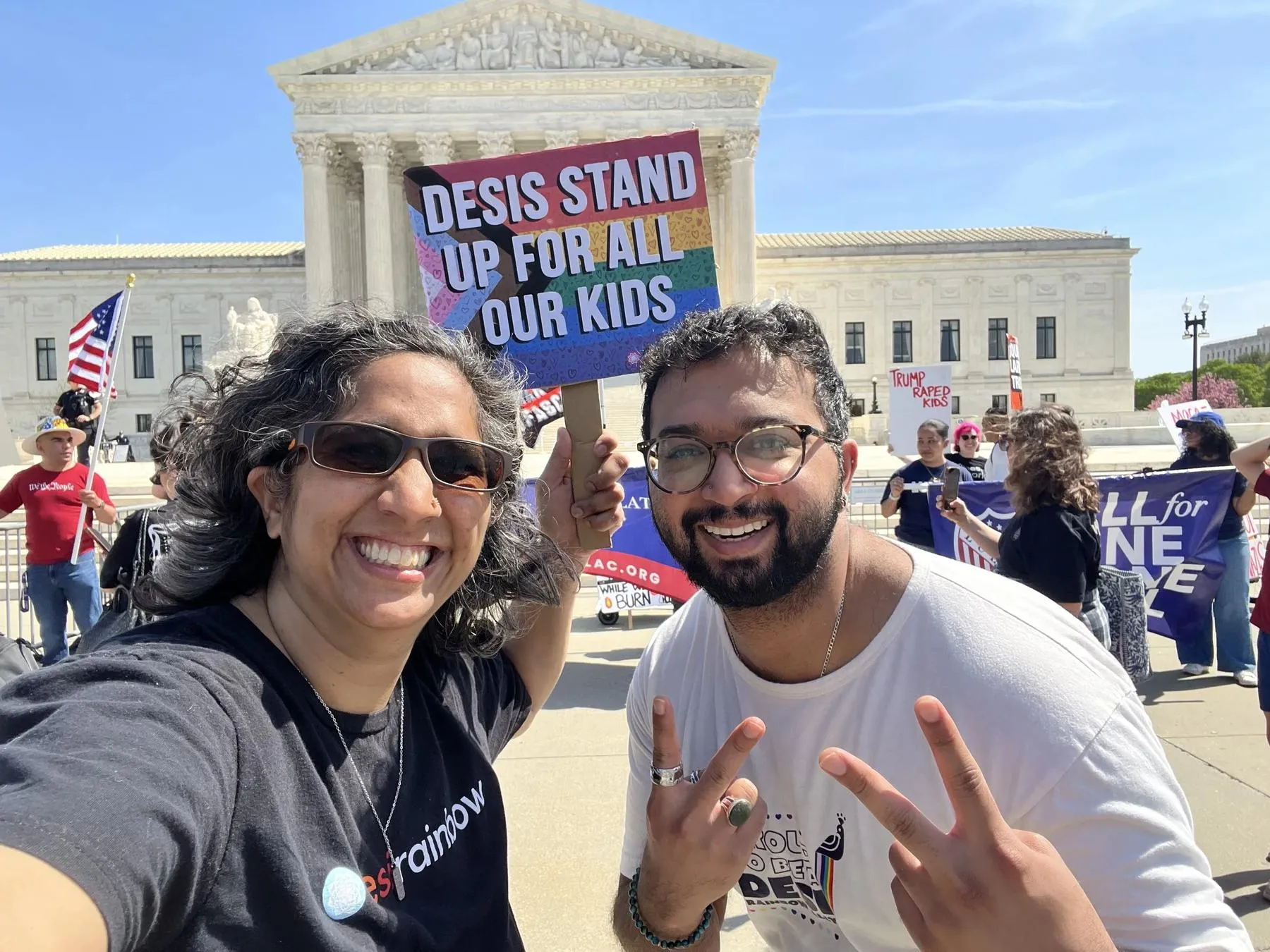
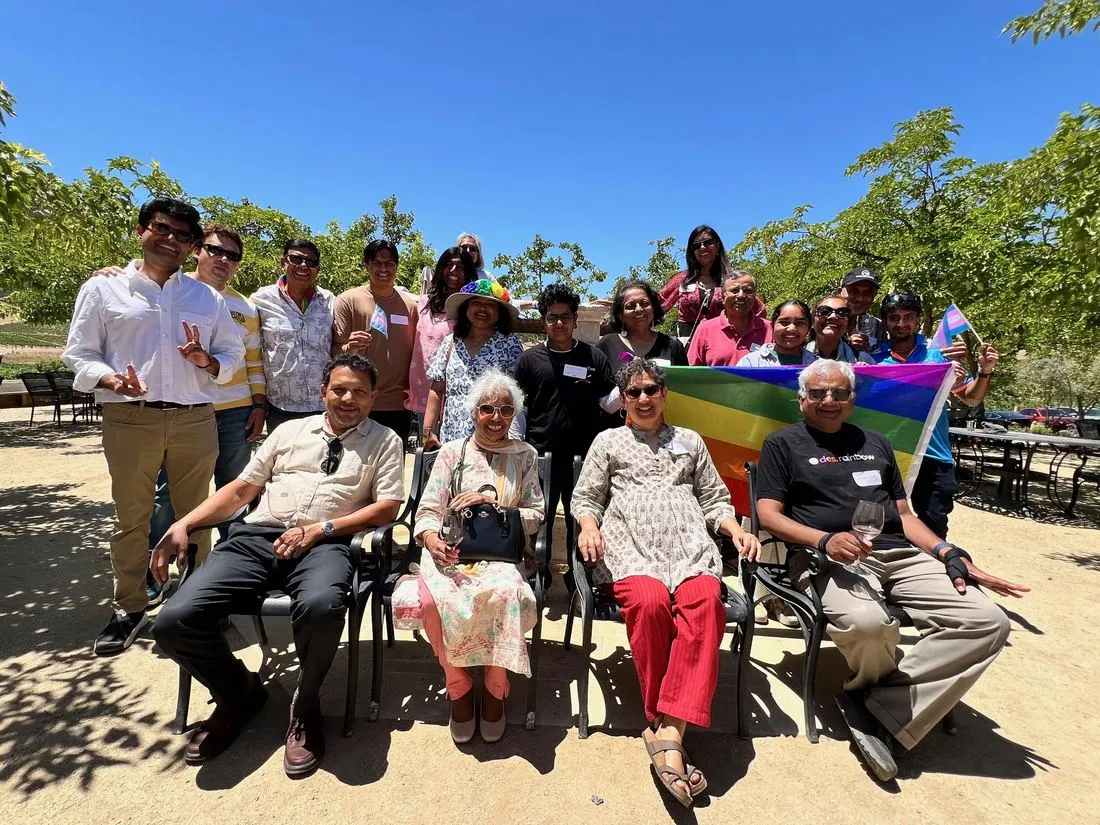
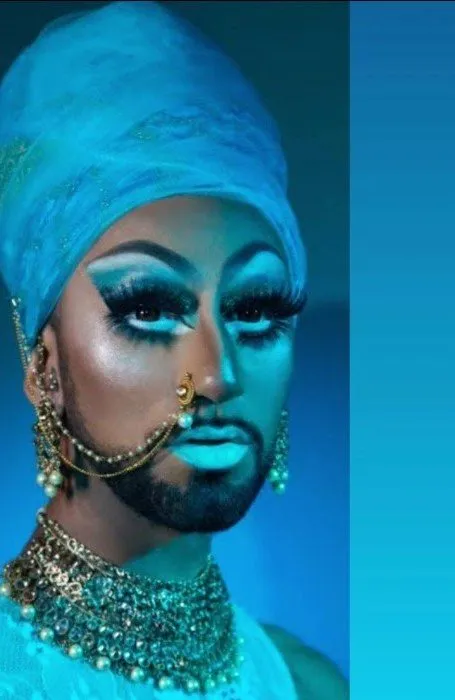
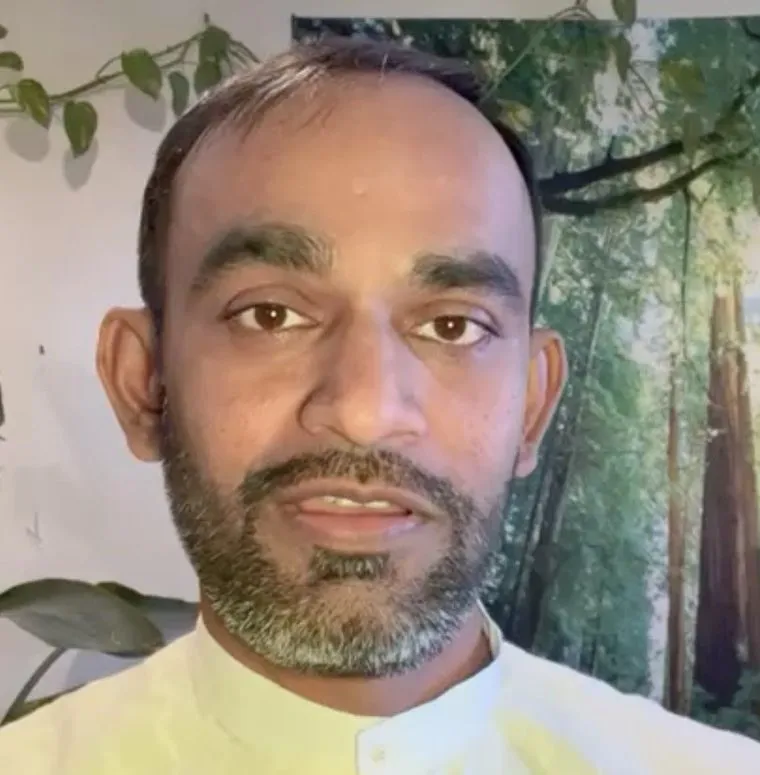
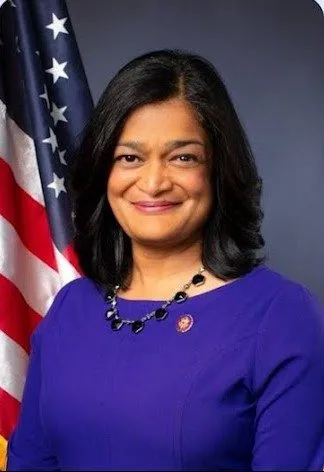
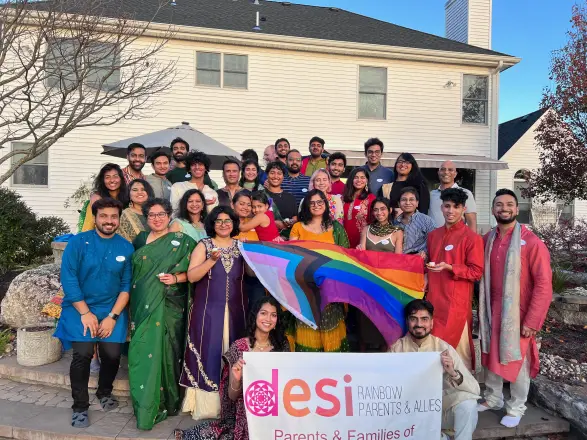
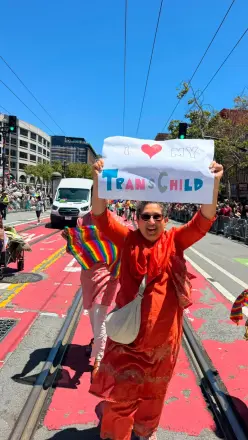
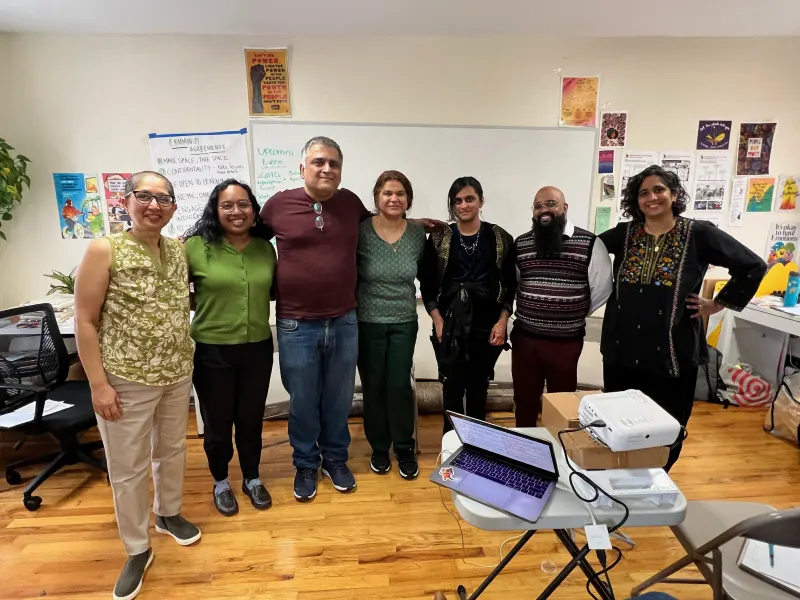
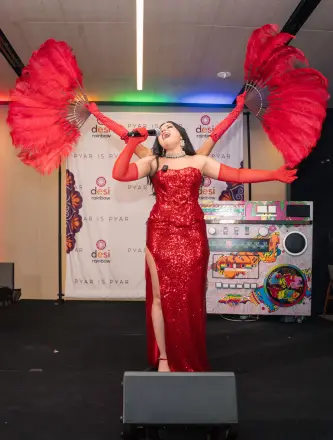
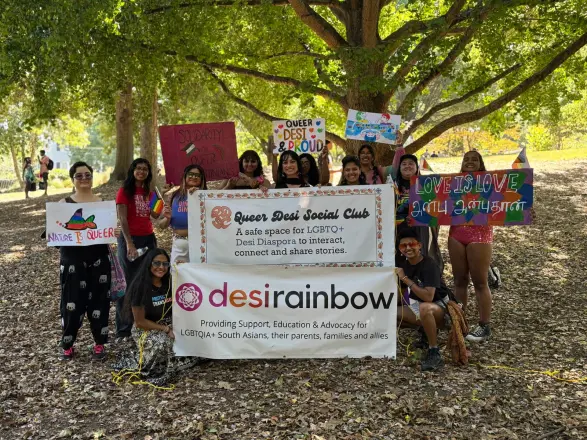
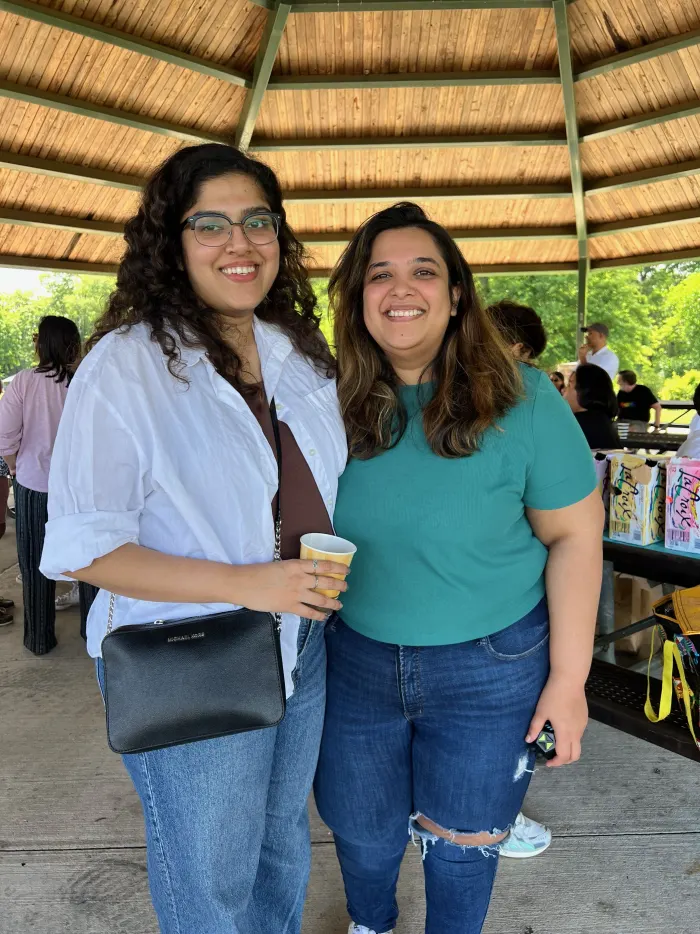
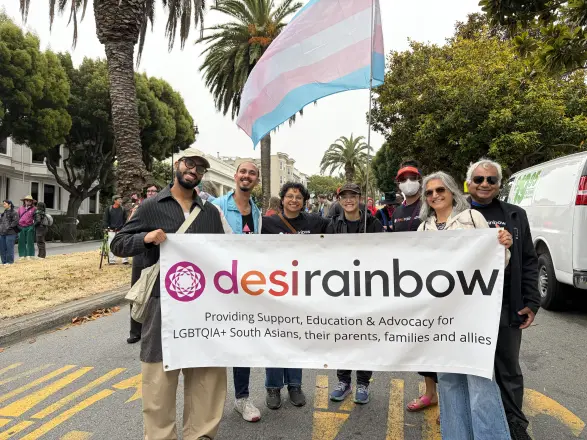
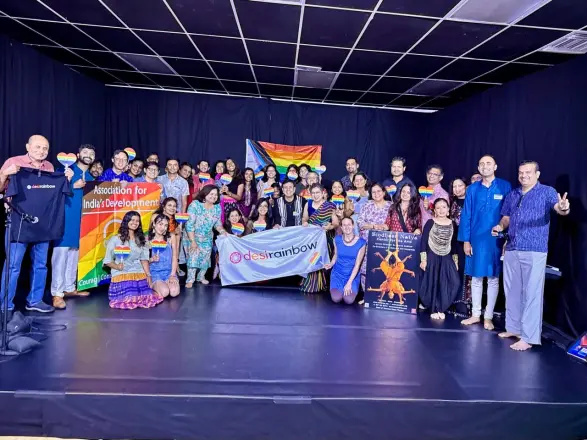
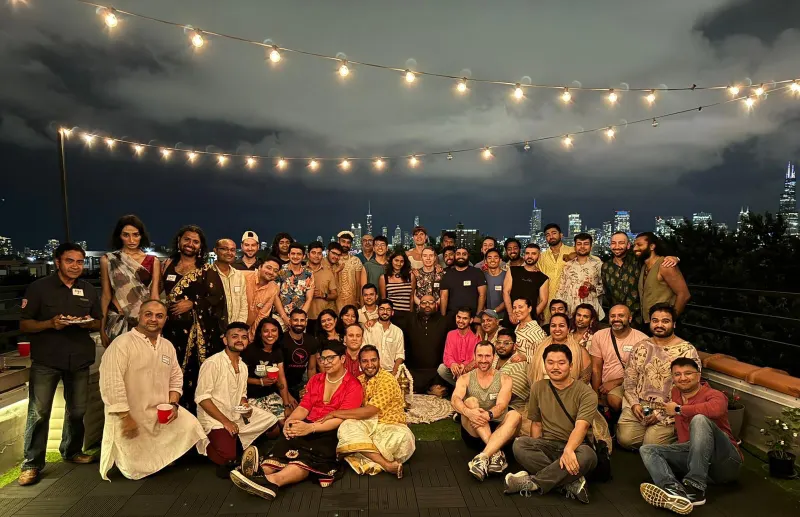
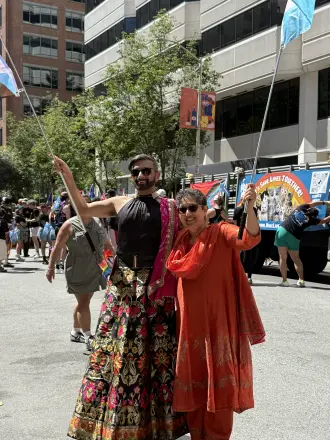
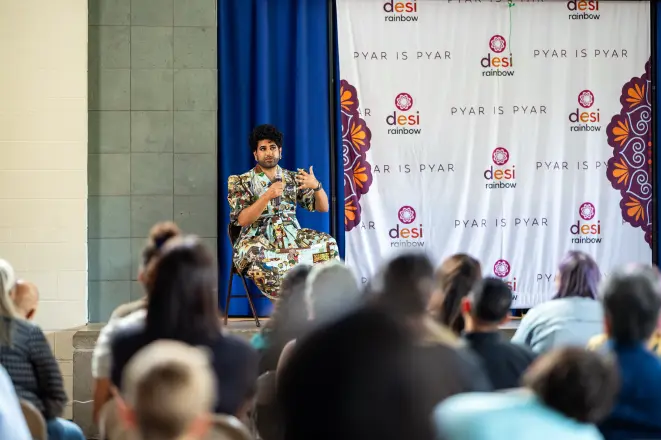
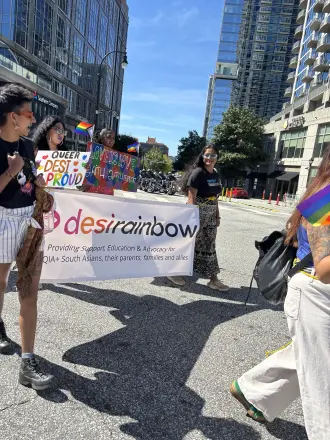
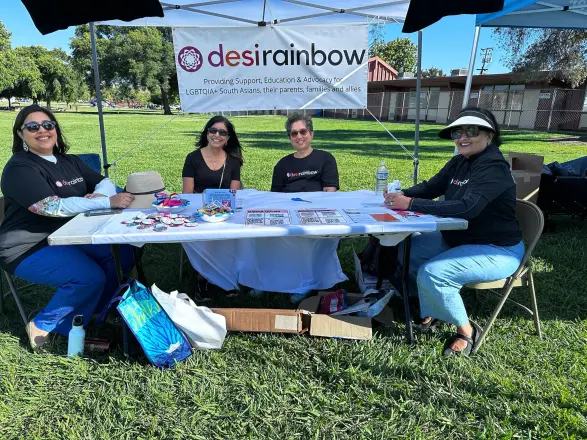
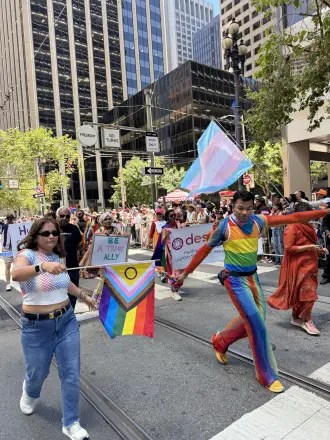
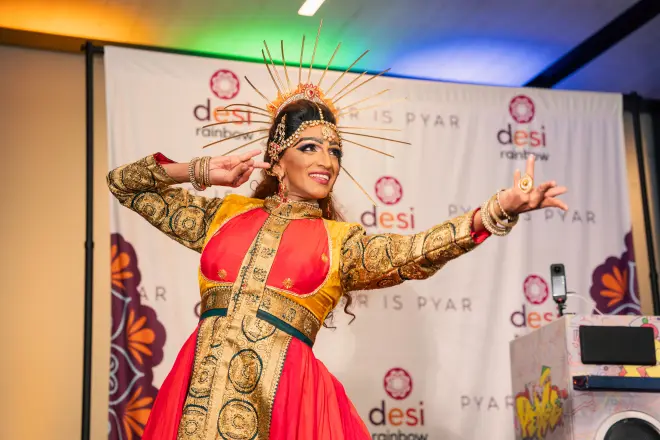
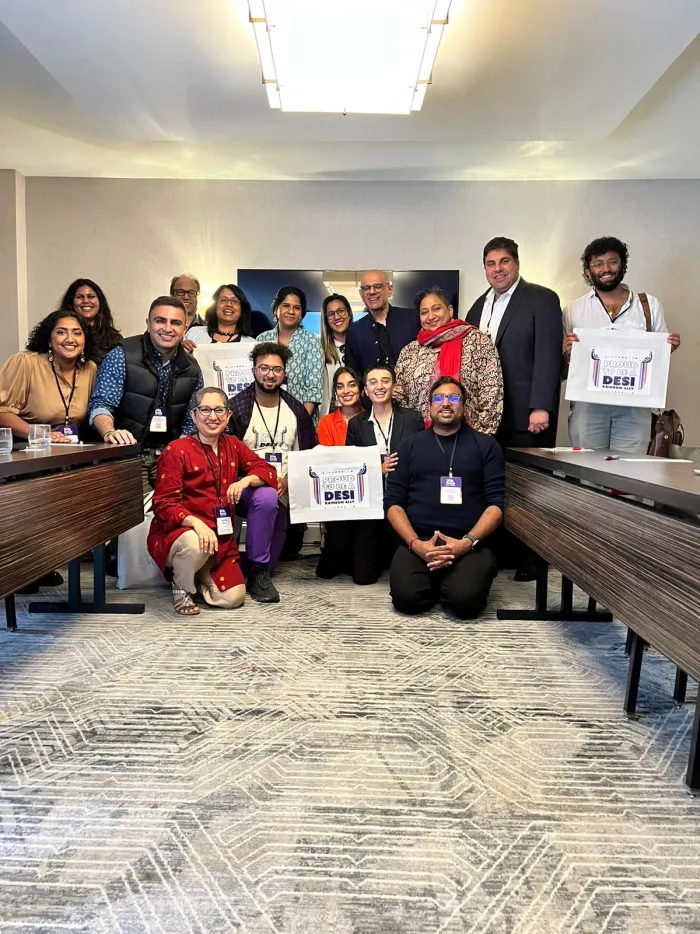
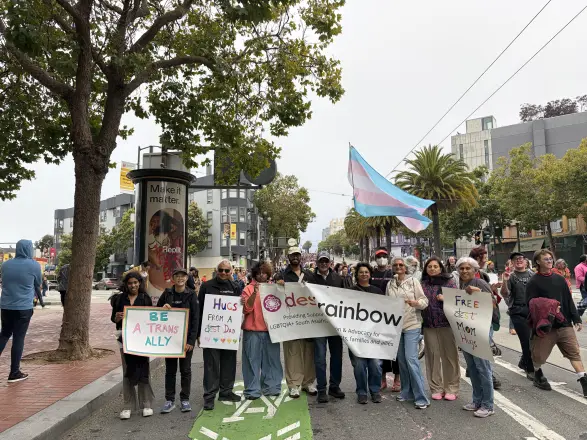
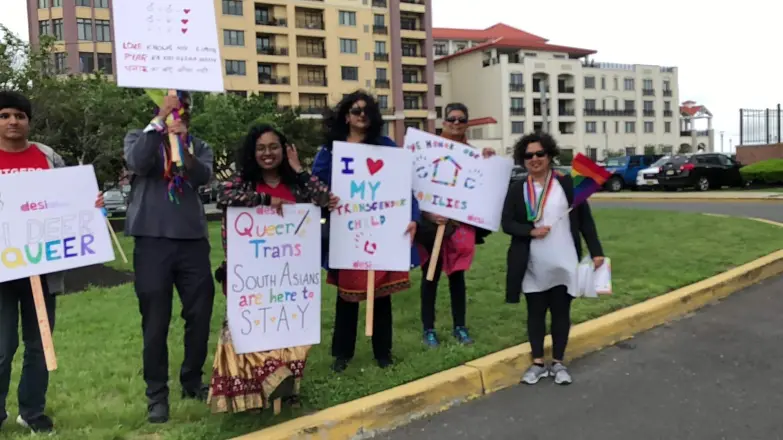
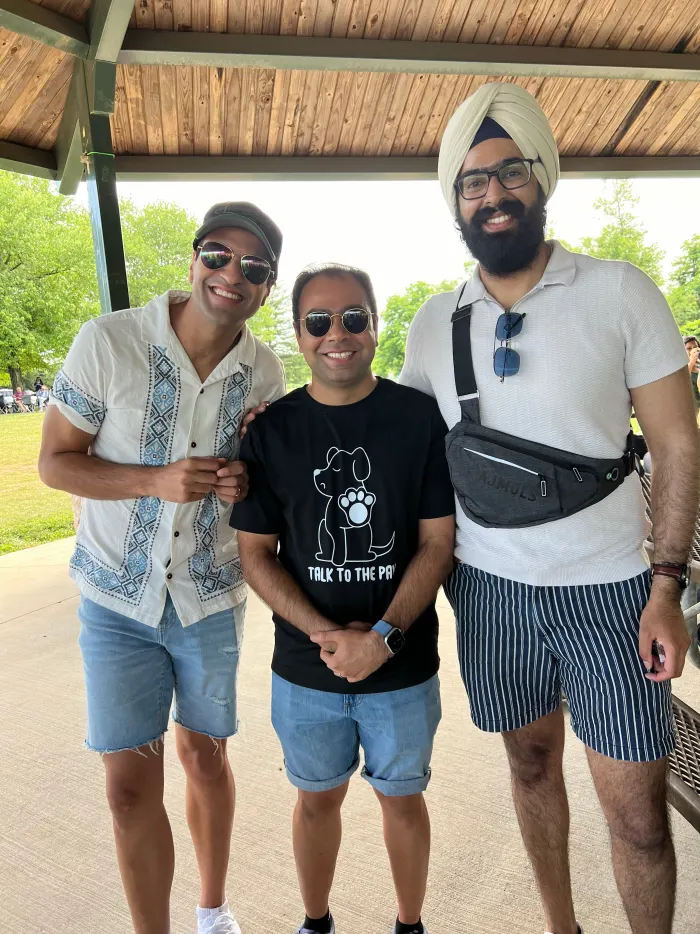
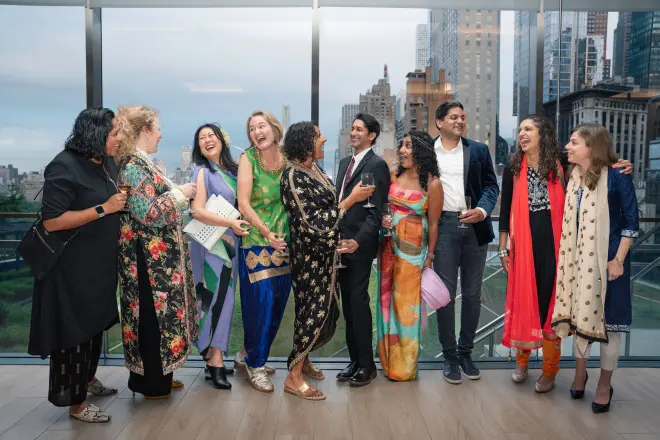
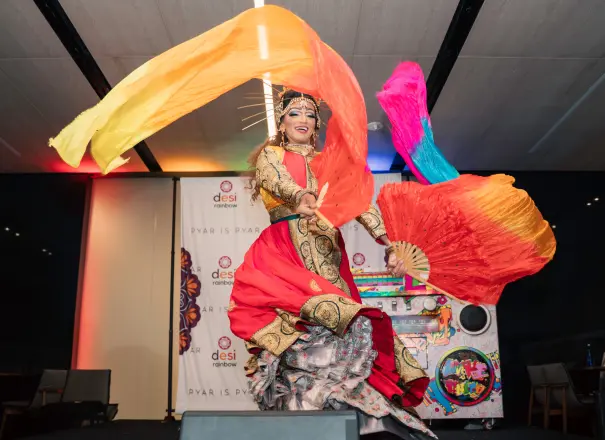
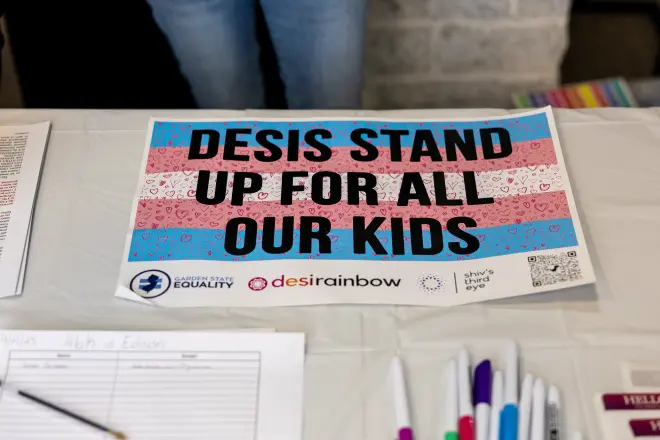
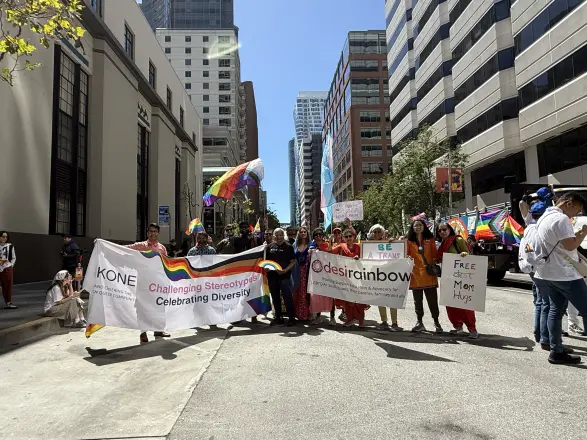
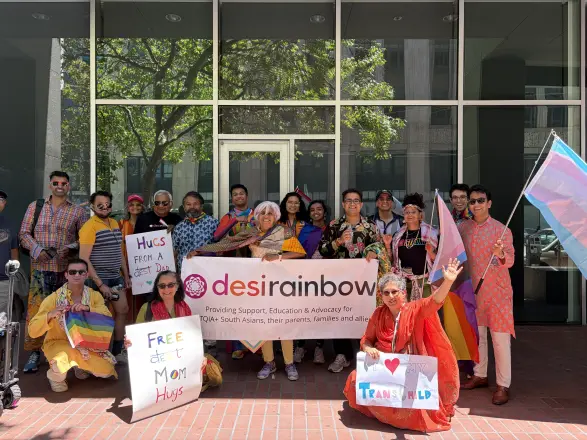
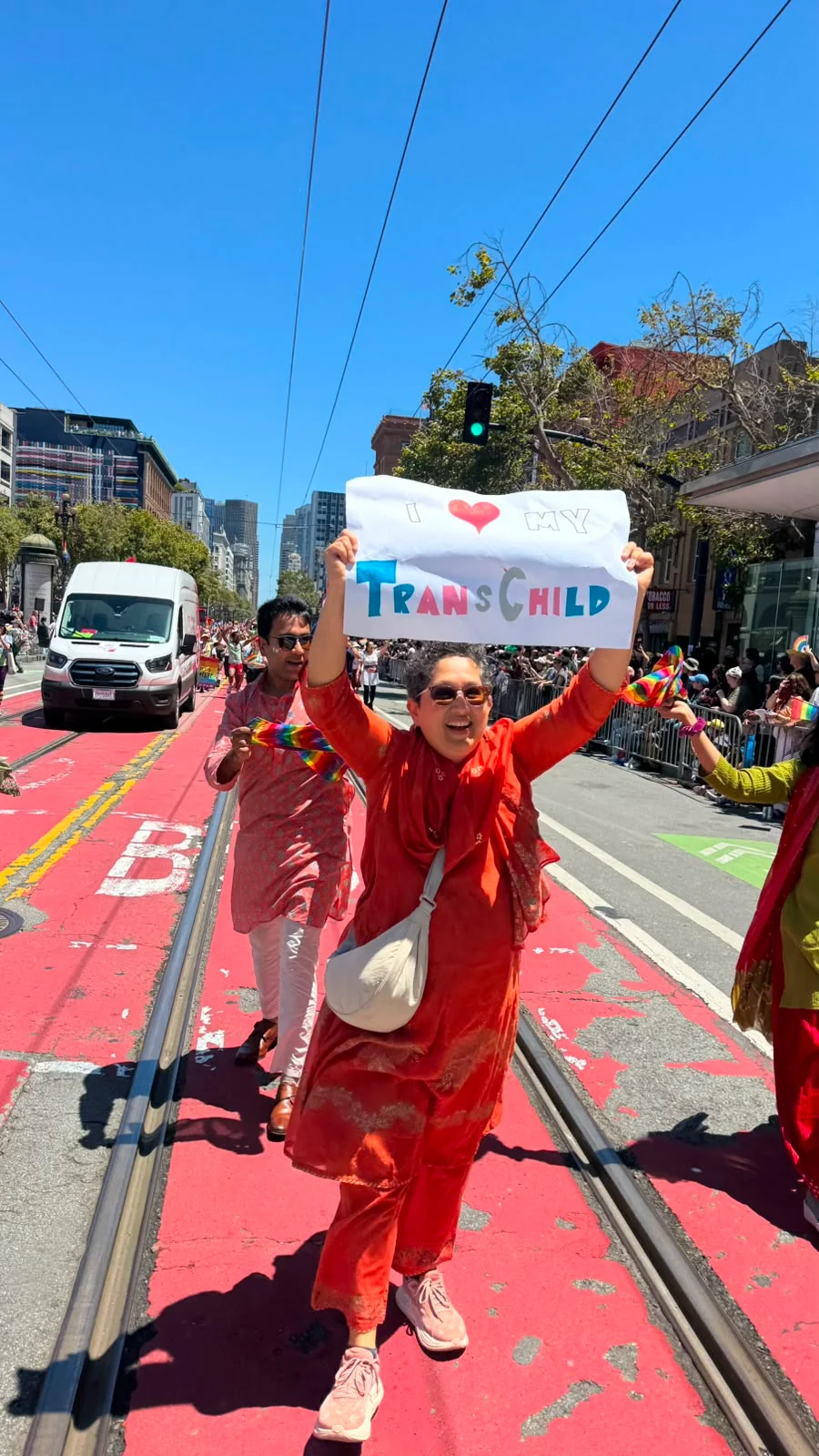
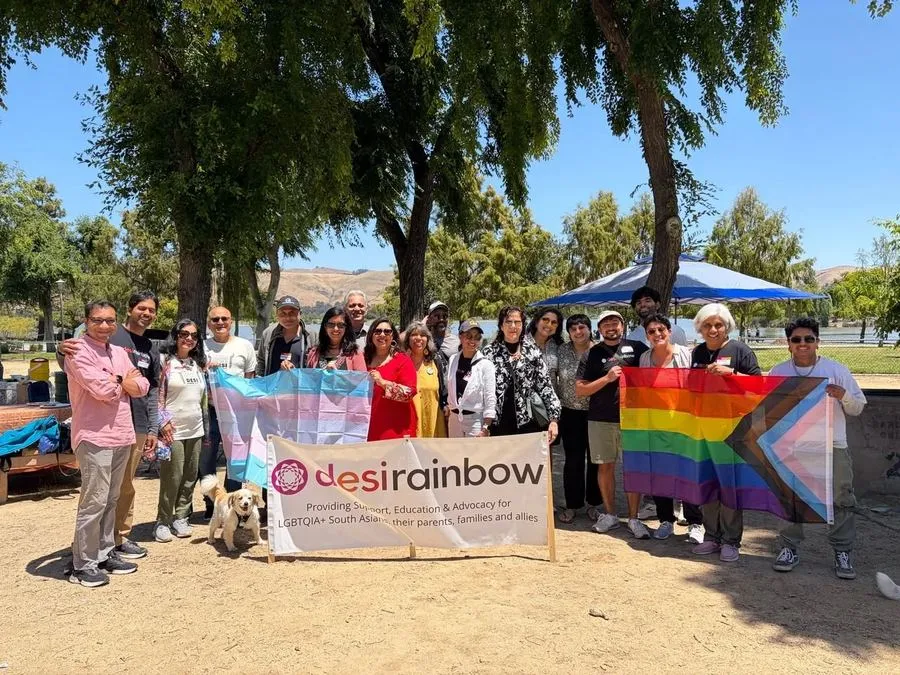
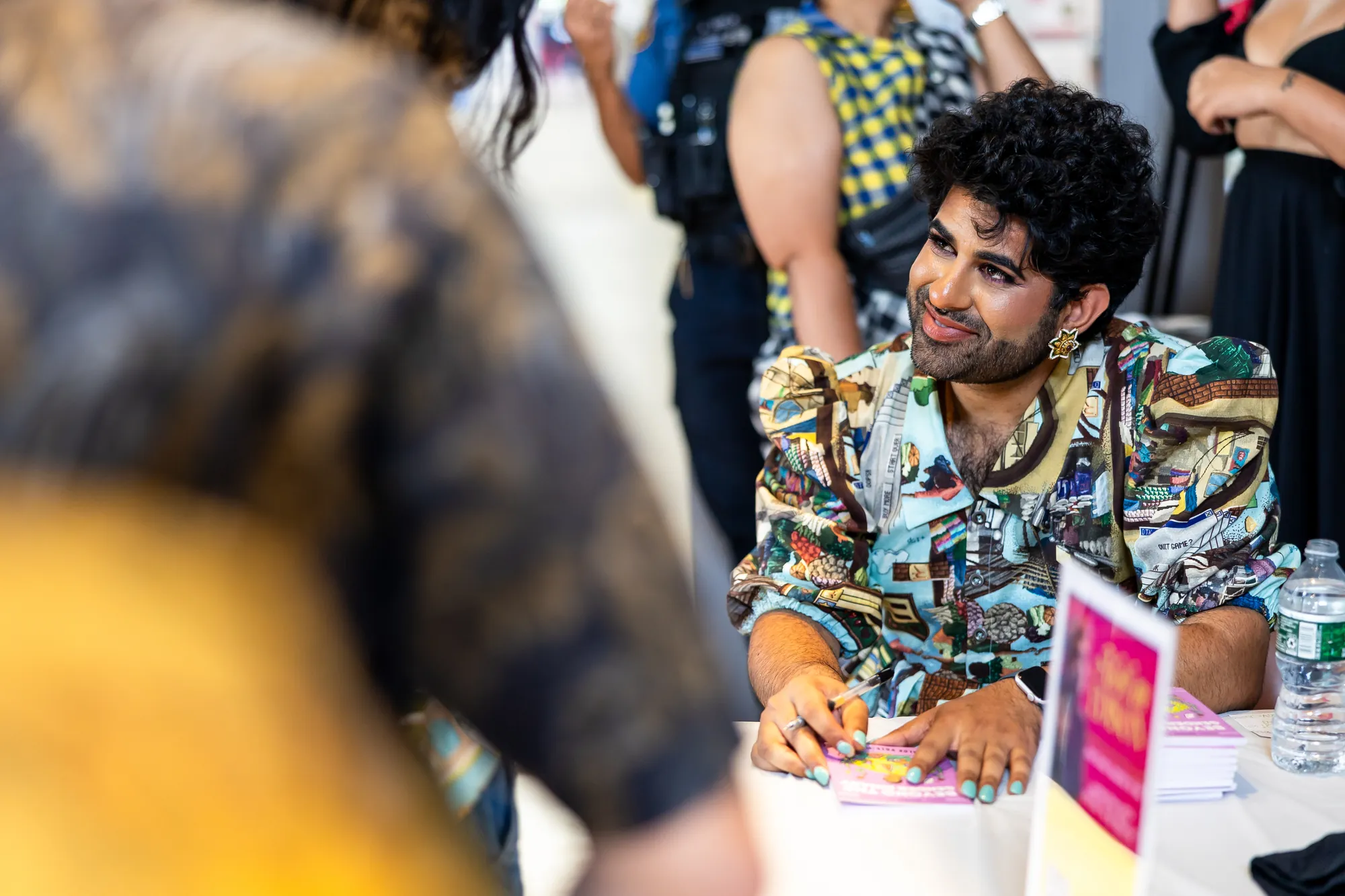
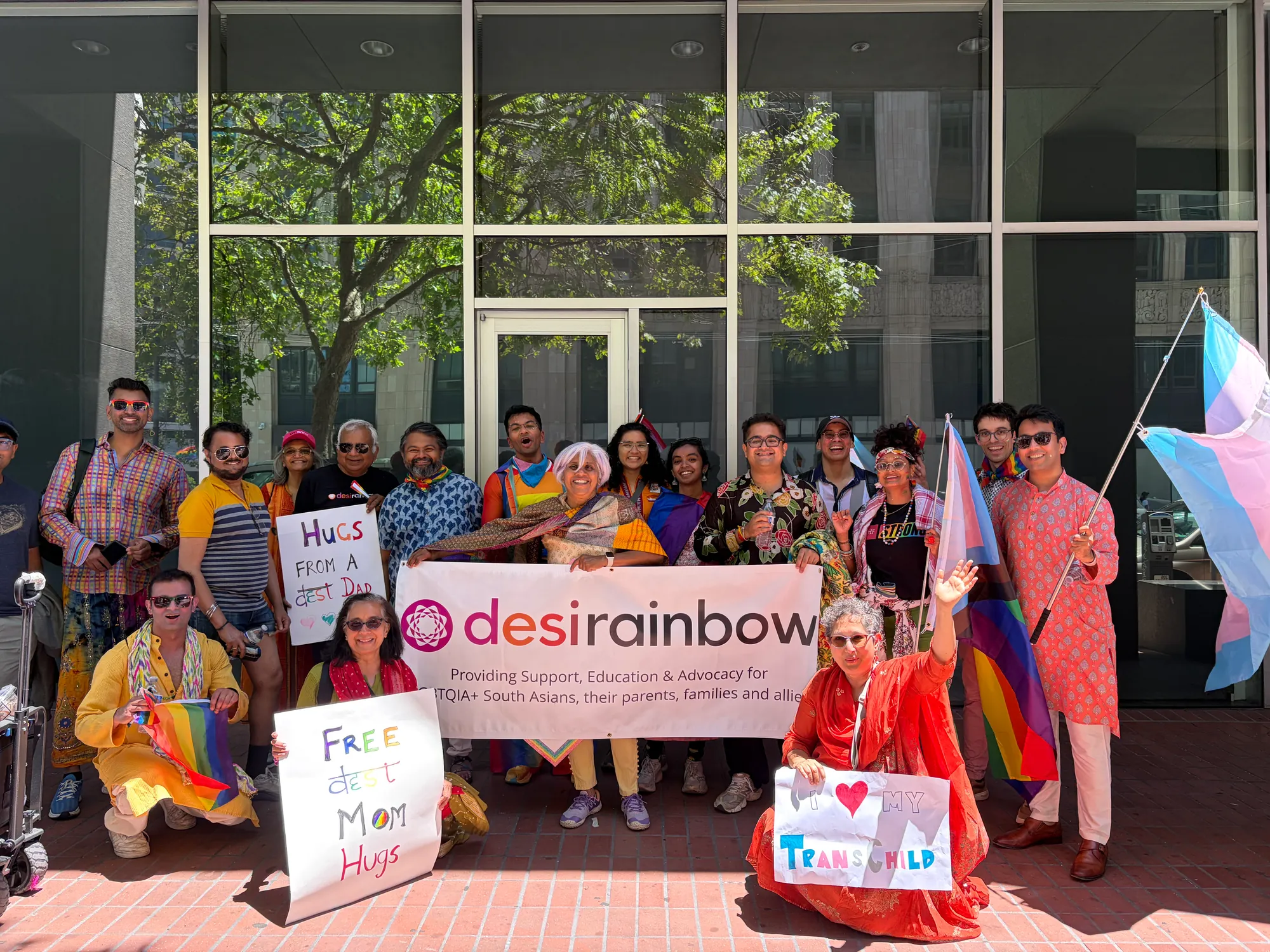
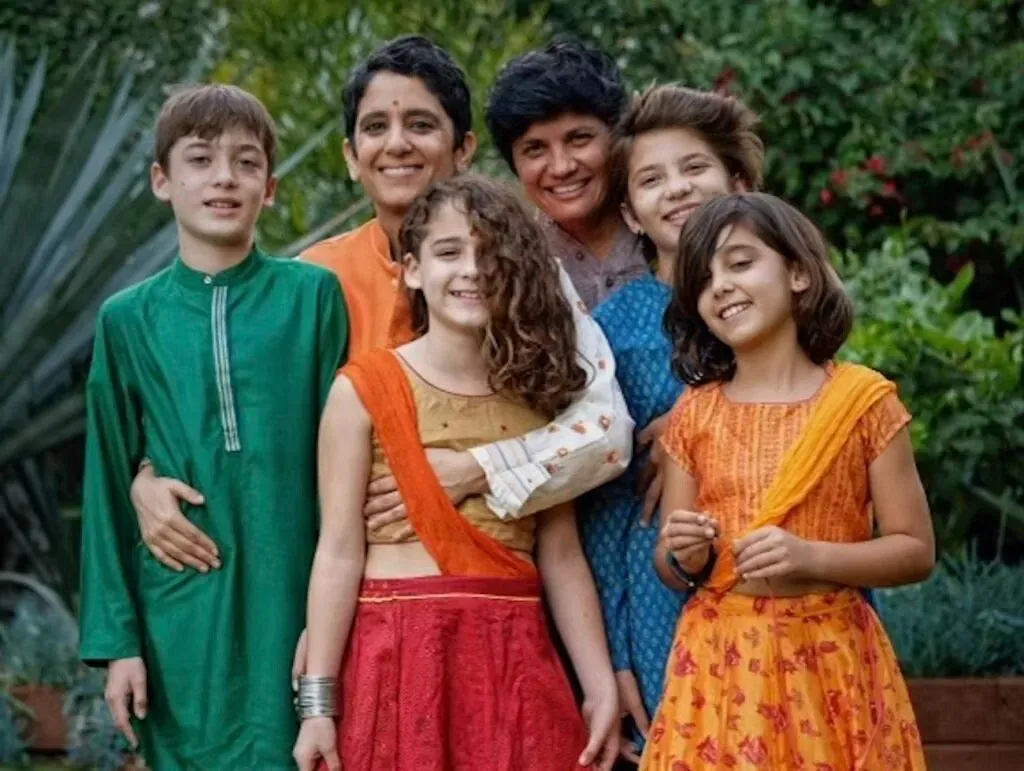
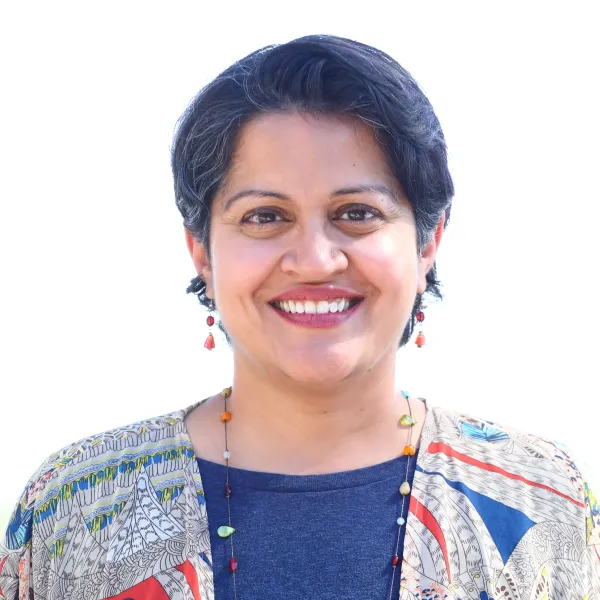
§1 Hero — Squarespace: section with background image, text block on top, dark color theme. Replaces the headline-over-flat-color hero. Photo is low-resolution here because I recovered it from a screenshot of your site — use your original file in the real build.
Building an intergenerational community for LGBTQIA+ Desis and their families
Desi Rainbow is a community of South Asian LGBTQIA+ people, parents and families — supporting each other since 2017.
Task tracker — action buttons. The tracker asked to replace the single "Programs" button with six named action items. The four doors below already do that job in visitor-need language, so rather than delete them the six named actions are added underneath as a compact link row. Line graphics are not included — those are Meryl's Canva assets, and each will need an image description for screen readers.
§2 Four doors — Squarespace: 4-up list section, title + description + button per card. Named for what a visitor needs, not for internal program structure. Distinct top rules so they don't read as four identical buttons.
Where would you like to start?
I need support
Free monthly groups and one-to-one peer support — for LGBTQIA+ people, and separately for parents and families at any stage of acceptance.
Desi Rainbow runs on individual donors. Your gift pays for the support groups, the peer-supporter training and the resources — all of which stay free for the families who need them.
§2b Mission & who we serve — both added from the task tracker. The mission sentence is reproduced word for word from the About page; formal statements shouldn't be paraphrased.
Our mission
Desi Rainbow provides support, education and advocacy for an intergenerational community of South Asian LGBTQIA+ people and their families.
We serve South Asian LGBTQIA+ individuals and their families based in North America / on Turtle Island.
§3 Next meetings as text — Squarespace: two plain cards with a button each. Replaces the Google Calendar embed, which moves to an Events page. Dates corrected: LGBTQIA+ is the first Tuesday.
Coming up
Your next chance to talk to someone
Both groups meet on Zoom and are free. You register once, then come whenever you can.
LGBTQIA+ Support Group
First Tuesday, every month
9pm ET / 8pm CT / 6pm PT
By and for South Asians who identify as LGBTQIA+. Talk with accepting Desi parents, and with peers who know the family conversation you're having.
§4 One parent's voice — Squarespace: two-column section, image left, quote right. Pull a real sentence from the Our Stories films. This is the emotional center of the page.
Our Stories
“We share our stories and journey so that other families can listen, learn, and know that they are not alone.”
— Desi Rainbow, from the Our Stories page
§5 The joyful strip — Squarespace: 3-up list section with images. This content already exists, buried on the Education page. This is where "fun and exciting" lives.
What we make together
It isn't all hard conversations
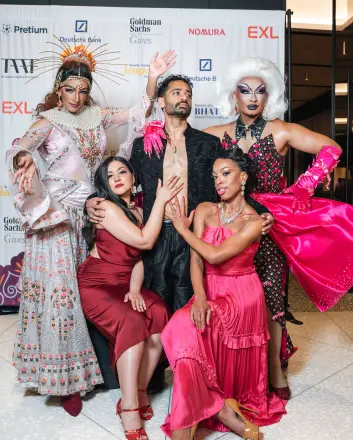
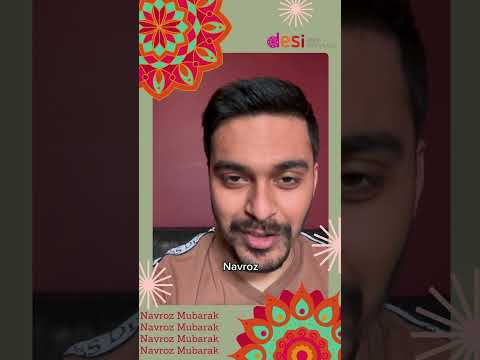
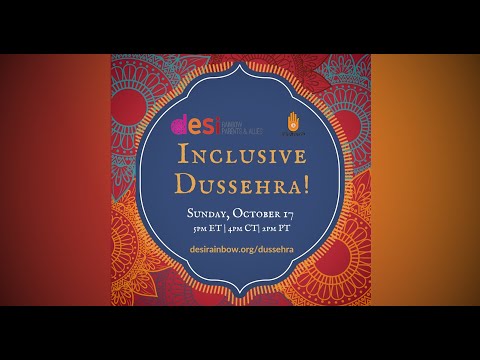
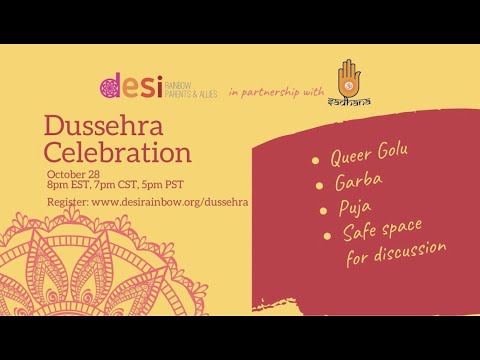
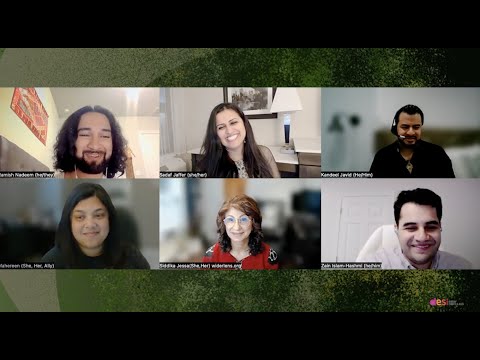
Drag storytime, inclusive Eid and Dussehra, films about Desi parents, and conversations with people building the lives our kids are told they can't have.
Story Time
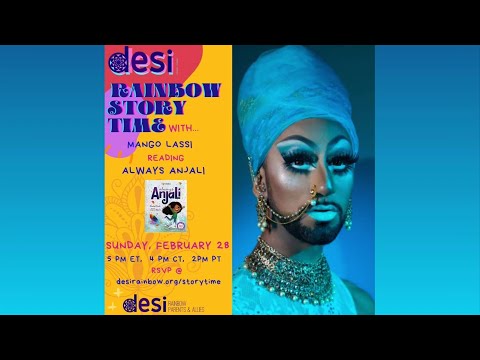
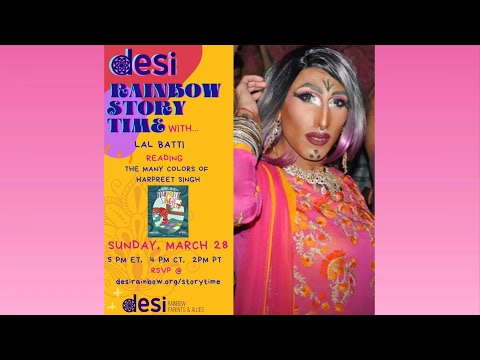
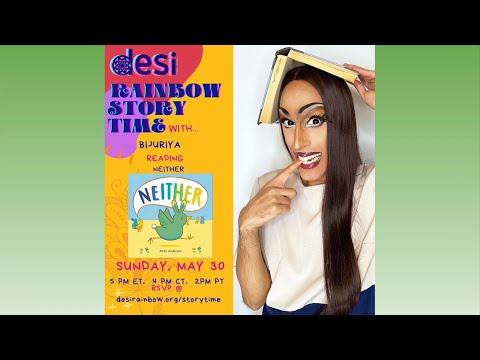
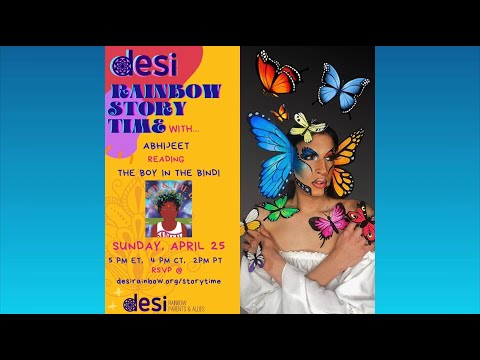
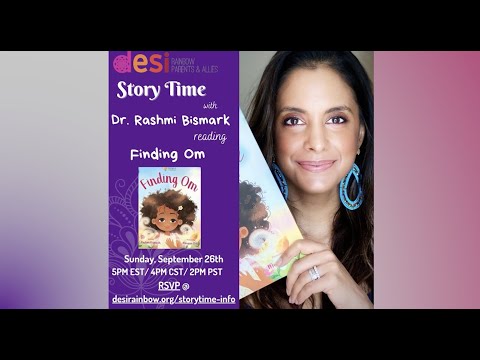
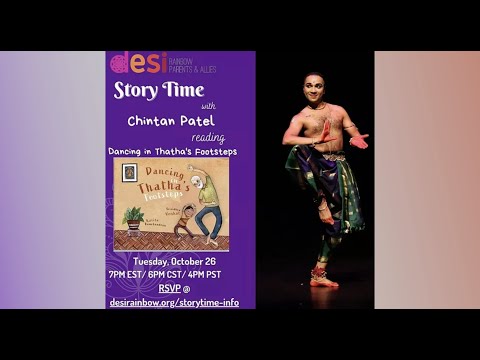
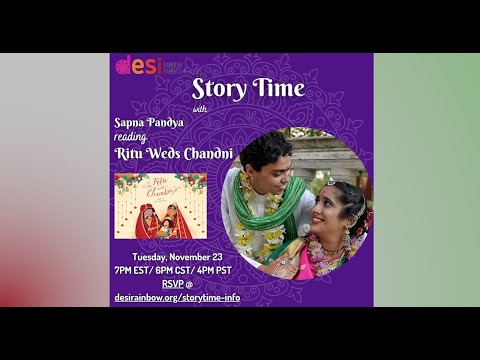
Desi drag artists read children's books that celebrate being different — The Many Colors of Harpreet Singh, Always Anjali, Neither.
§5b Event photo carousel — from the task tracker. Structure only: the photographs are the one thing I can't produce. Drop a photo into each slot and write an alt description for it — the slots are deliberately visible so an unfilled one is obvious. In Squarespace this is a gallery section set to Slideshow, so no code is involved.
From our events
In person and on Zoom
Story Time, Faith & Family celebrations, chapter meet-ups and Pride.
§6 Support our work — copy taken verbatim from your current Donate page. No invented figures.
Support our work
Funded by individual donors.
Desi Rainbow depends entirely on individual donors like you to sustain our programming. Your support is integral in continuing our life-affirming work and creating a safer and more loving world for all LGBTQIA+ South Asians.
Who We Are — this is where the mission and vision statements live, moved off the homepage. They are reproduced word for word from your current About page; formal statements shouldn't be paraphrased.
Who we are
It started with one mother who couldn't find help.
She looked for other Desi parents who understood, found nothing, and built it herself. Desi Rainbow has been growing ever since.
Our mission
Desi Rainbow provides support, education and advocacy for an intergenerational community of South Asian LGBTQIA+ people and their families.
Our vision
An intergenerational Desi Diaspora community that values, affirms and celebrates diversity of gender and sexuality.
Our story
Desi Rainbow was conceived in 2017 for South Asian families and friends of lesbian, gay, bisexual, transgender, queer and questioning people — to learn about LGBTQIA+ issues, find community with one another, and learn how to better support their loved ones.
We serve Desi individuals and families who trace their origins to South Asia, including India, Pakistan, Bangladesh, Sri Lanka, Nepal, Bhutan and the Maldives. Most of our members are in the United States and Canada, but our reach extends wherever there is a South Asian diaspora. We welcome and celebrate diversity of religion, class, caste and experience. We aim to foster understanding and acceptance among families, with the goal of affirming and celebrating our LGBTQIA+ loved ones.
We started out intending to support parents and build allyship, and that is still the core of who we are. But many of the people who reached out were LGBTQIA+ themselves, struggling with family acceptance and asking to speak to an accepting Desi parent who could give them hope. So we grew into something intergenerational — LGBTQIA+ people, parents, siblings, aunts, uncles, and community members who simply decided this should exist.
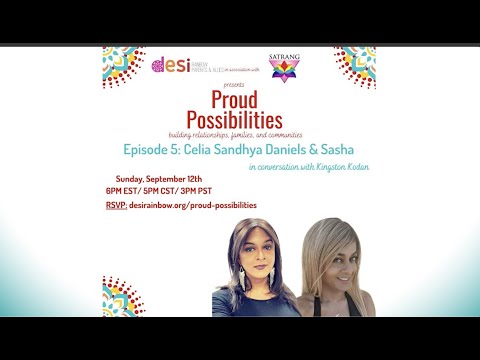
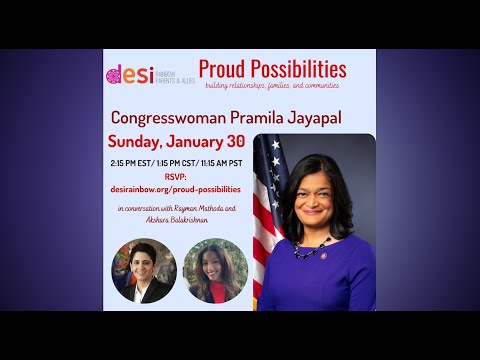
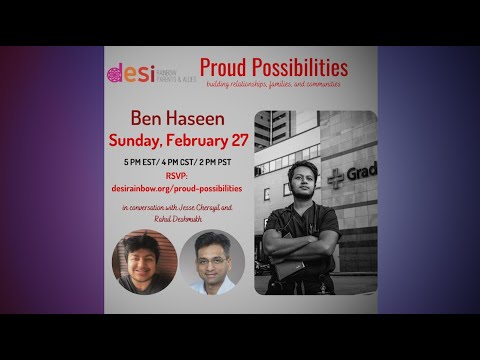
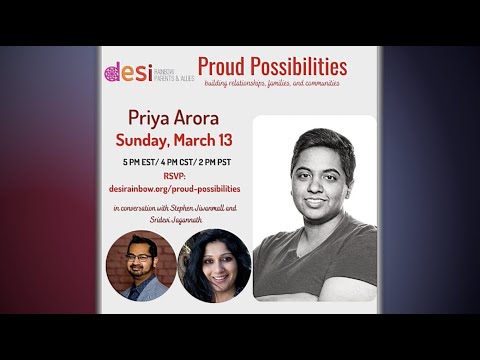
Almost all of our work is virtual. We host monthly online support and discussion groups for parents and family members of LGBTQIA+ people, and for LGBTQIA+ people struggling with family acceptance. We offer educational programs like Proud Possibilities, which features LGBTQIA+ possibility models for our community, as well as speaker events on topics such as mental health and raising transgender children.
We are dedicated to the idea that being proud and visible, supporting others and telling our stories will transform the lives of LGBTQIA+ children of all ages, and of their families. Our team grows every day with people who want to volunteer their time, their skills and their empathy. Nearly everyone involved is a volunteer.
Upcoming Events — your current Events page contains unedited Squarespace demo content ("Vision Summit", "Creative Sync", "Inspire Night", all dated 10.21 with identical filler copy). Replaced here with your real recurring program, plus a This month slot — two cards for one-off events, rewritten at the start of each month. In Squarespace that is one section with two cards, edited in the editor.
Upcoming events
What's on.
Our two support groups run every month, and Saathi one-to-one peer support is available any time. Speaker events, celebrations and Story Time are announced through the newsletter and our WhatsApp community.
Your live Google calendar — the same one that was embedded on the homepage. It belongs here, where someone has already asked for detail.
Everything else
Faith & Family celebrations, Proud Possibilities conversations, Story Time, and our annual Pyar is Pyar fundraiser are scheduled through the year. The newsletter is the reliable way to hear about them first.
A series of short films released at the end of 2021, featuring the parents of Desi Rainbow. We share our journeys so other families can listen, learn, and know they are not alone.
Tejinder Gill
Mahereen Baig
Mona and Prashant Patel
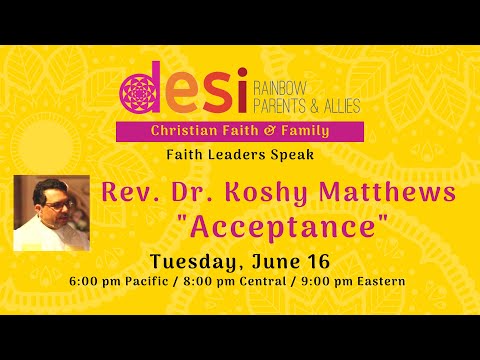
Koshy Matthews
Co-creators
Hemakshi Gordy (she/her) has been making films since 2018, when her short documentary won first place in C-SPAN's StudentCam competition.
Sonali Gulati (she/her) is an independent filmmaker, feminist, queer rights activist, Guggenheim Fellow, and Professor at Virginia Commonwealth University's School of the Arts. Her films have screened at over four hundred festivals worldwide.
Advocacy
Fighting hate with love, in public.
We speak up for LGBTQIA+ South Asians and their families — in schools, in policy, and in our own communities.
Ongoing action items
Take the Trans Ally Pledge
Commit publicly to standing with transgender people in our community.
Statements — each of our seven statements now has its own page on this site, with the full text copied from the old Wix blog. Links inside them point to pages on this site (Support, Get Involved, Donate) instead of the old site. Partner statements are listed separately so they don’t read as ours.
Statements
Where we stand.
Public statements from Desi Rainbow Parents & Allies.
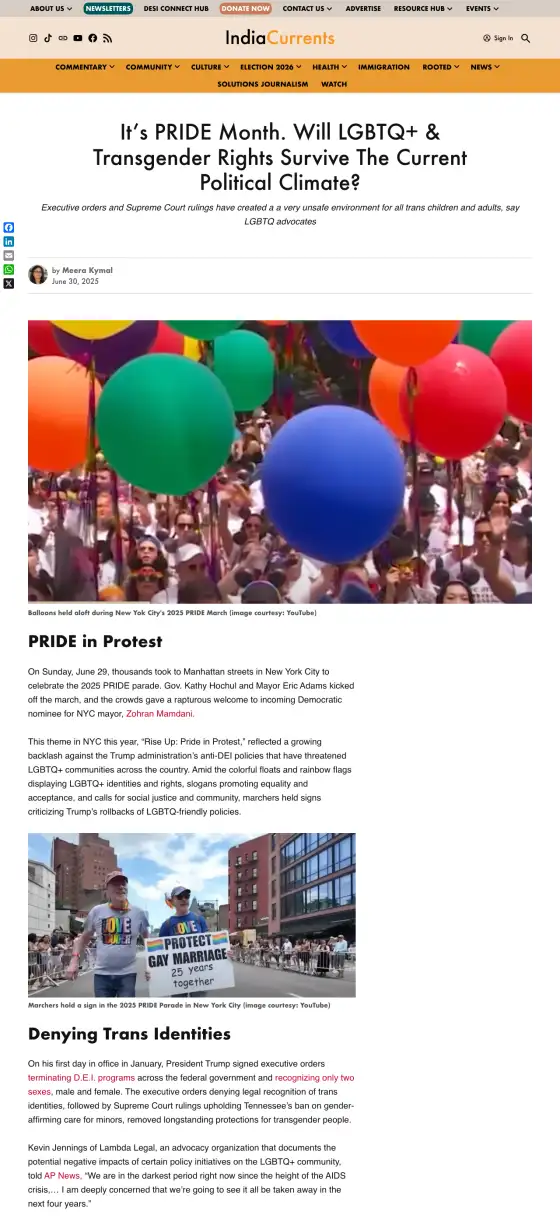
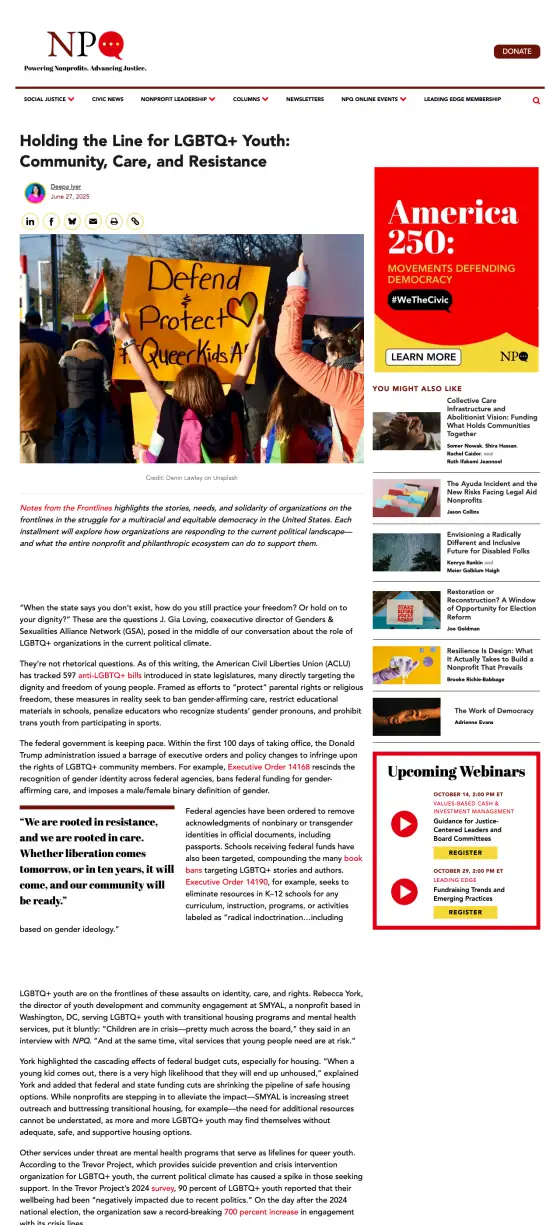
The Trump Administration is threatening life-saving healthcare for vulnerable trans children by publishing a rule on August 11, 2026, that prohibits federal Medicaid funds from being used to provide medically necessary care to transgender youth under age 18.
Desi Rainbow strongly condemns the passage of the Transgender Persons (Protection of Rights) Amendment Bill, which rolls back rights established a decade ago.
New Rule Prohibits Federal Medicaid Reimbursement for Transgender Youth Care
· Desi Rainbow
The Trump Administration is threatening life saving healthcare for vulnerable trans children by publishing a rule on August 11, 2026, that prohibits federal Medicaid funds from being used to provide medically necessary care to transgender youth under age 18 (and Children’s Health Insurance Program [CHIP] funds under age 19). We stand with the parents and families facing attacks on their health care by the Trump administration.
We urge health care providers and hospitals to continue to fulfill their duties and obligations to protect the health of all patients. This is a wake up call for states to take aggressive actions to protect essential medical care and push back on this unprecedented federal overreach.
What The Rule Does
Prohibits the use of federal Medicaid funds to cover puberty blockers, hormones, or surgeries.
Does not prohibit this care from being covered with state-only Medicaid funds or private insurance.
Does not prohibit the use of federal funding for supportive mental health care.
Provides a 6-month “tapering” period for transgender youth currently receiving hormone therapy. This tapering period does not apply to puberty blockers.
Will go into effect on October 13, 2026.
The Facts About Healthcare For Trans Kids
Medicaid is a lifeline for millions of children and their families around the country.
Decades of research show that care for transgender youth is safe, effective, and beneficial, and every major U.S. medical and mental health association in the U.S. supports access to essential medical care for transgender youth.
Health care should be based on science, medical expertise, and the needs of children and families.
Medical decisions belong to parents, families, and doctors, not to politicians.
All children should be happy and healthy. Like all other parents, the parents of transgender youth should have the freedom to get their child the care they need to stay healthy.
The Trump administration has repeatedly put politics above families and thrown science under the bus to advance its baseless theories.
What The Rule Changes, What It Doesn’t
It does not change the legality of providing care for transgender youth.
The administration has not finalized the proposed rule that would amend the Conditions of Participation (COPs) to prohibit hospitals that receive Medicare and Medicaid funds from providing care to transgender youth under age 19.
State Medicaid funds can be used for this care.
The U.S. Supreme Court’s June 2025 Skrmetti decision leaves decisions about health care for transgender youth to states and places no new legal limitations on care in states that do not have them.
The administration’s threats to terminate funding for health care organizations that provide this care are currently blocked by the courts.
Join an advocacy training for Desi families of trans children on August 20th: Open the form. You will learn how to contact your elected officials and advocate for trans chidlren and adults.
Receive our advocacy alerts: Desi Rainbow Trans Ally Pledge: Open the form
Submit your story about the impact on your family: Open the form
Cause for both Joy and Sorrow: Supreme Court Rulings on June 30th, 2026
· Desi Rainbow
The Supreme Court issued two decisions on June 30th, one that we celebrate wholeheartedly, and one that disappoints and saddens us.
As an organization that serves South Asian LGBTQIA+ immigrants and their families, Desi Rainbow celebrates the Supreme Court’s rejection of the attack on birthright citizenship. This decision upholds a constitutional promise that has protected generations of Americans, and ensures that South Asian American children are guaranteed citizenship regardless of their parents’ immigration status.
At the same time, we are saddened by the Supreme Court’s decision to allow state-level bans on transgender girls’ participation in sports to stand, including those previously passed in 27 states. This ruling is deeply disappointing and hurts trans youth and their families.
The bans single out trans girls for exclusion without context, treating a kindergarten soccer game the same way as an elite athletic event. Looking forward, we must work to replace bans with rules for participation that are tailored to achieve fairness in different sports at different ages and levels of competition. All students playing sports deserve to be treated with dignity and respect.
The 2025-2026 Supreme Court term has been a disappointing one for LGBTQIA+ rights and protections, with rulings that refuse to allow a state ban on conversion therapy (a dangerous and discredited practice) in Colorado and allow forced outing of trans students in California.
We believe that these rulings do not define the future of trans children or our LGBTQIA+ community and their families. No court ruling can diminish our power, our joy, or our resilience. We will continue our grassroots work to ensure that our community receives support, education and advocacy to weather these storms and continues to resist and thrive.
###
About Desi Rainbow: Desi Rainbow is a national nonprofit organization dedicated to the vision of a South Asian diaspora where diversity of sexuality and gender is valued, affirmed and celebrated. About us.
Statement on Indian government’s passing of the Transgender Persons Amendment Bill 2026
· Desi Rainbow
Desi Rainbow strongly condemns the passage of the Transgender Persons (Protection of Rights) Amendment Bill on March 26, which significantly rolls back rights that were established a decade ago. This bill actively harms transgender people by denying self-identification, narrows the legal definition of a transgender person to erase trans men, non-binary, and gender-fluid individuals from legal recognition and subjects trans people to scrutiny by state-appointed medical boards and district magistrates. Even more chilling is that the bill introduces severe penalties, including life imprisonment, for those who "abduct" or "forcefully alter" the identities of children or adults—provisions that could be used to target affirming parents, NGOs, medical providers, or chosen families that support trans youth,
We are appalled and saddened by the erasure of transgender rights in India in a single act that reverses a decade of progress.
We represent a large Indian American diaspora consisting of LGBTQIA+ South Asians and their parents and allies, who are proud of India’s trans community and its history of resilience. We stand in solidarity with trans people in India in their battle for legal recognition and equal rights.
If you need support to process this painful moment, here are some resources:
In the United States
Desi Rainbow Support Groups: the monthly LGBTQIA+ group (details) and the Parent & Family group (details)
Saathi - talk to a Desi Rainbow Saathi volunteer (details)
Today, like everyone trapped by flashing red hearts that jump out at you from every corner of the media, I’m thinking about love. Over the weekend, I met several couples for the first time and each of them exemplified what love is.
One couple had recently got married in a civil ceremony, with a small group of friends cheering them on. The joy on the faces in the photos they showed me on their phones was incandescent. They were queer Indian American women, and they told me their families hadn’t warmed to the idea at the time, but now, they were treated like any other married couple when they visited.
Another couple invited me for breakfast, and over a meal of tacos and chai, talked about how they had met through work. One partner was transgender and white, and the other cisgender and Indian. One was very tall, and one very short, and they smiled at each other as I told them what a lovely couple they make, and my heart melted. They shared their own story - one of their families having initial worries about the relationship, but eventually fully supportive, and the other facing complete rejection from their family.
What I’ve observed in my journey as an ally is that LGBTQ+ folks take love seriously. They have had to. They have had to battle families and communities that make them feel their same-sex attraction and gender identity is shameful as they are growing up. Many have faced emotional and physical violence as children and learned to protect themselves the hard way. As adults, they have faced a world where their love is considered illegal, wrong and disgusting. So when they find love, they claim it fully, wholeheartedly, and it is a beautiful thing to see.
In the USA, the law of the land has finally affirmed the right of LGBTQ+ people to marry and claim the right that all cisgender, straight people take for granted. In other parts of the world, including South Asia, this right is far from guaranteed. In Sri Lanka, the government just announced that it plans to decriminalize same-sex relationships. In India, while same-sex relationships were decriminalized in 2018, the Supreme Court will hear the petitions of gay couples demanding legalization of same-sex marriage in March. Winning these legal battles will make a huge difference to the fear and violence that LGBTQ+ people face, but the battle to change the attitudes, hearts and minds of all of society remains a much larger one.
This Valentine’s Day, I’m celebrating LGBTQ+ love in all its infinite beauty. Those flashing hearts should reflect all colors of the rainbow.
This Pride Month, if you are LGBTQ+ or have someone who is in your family or community, I urge you to educate yourself and speak up publicly about your support for the LGBTQ+ members in your temple, gurudwara, Diwali party and weddings.
I had no idea I was lesbian when I was growing up in India. Sure, I was privately drawn to and ‘in love’ with the beautiful Bollywood heroines, from Sadhna and Madhubala to Madhuri Dixit and later Deepika Padukone. But I still remember the first time I heard the word “queer” was at a dinner party in Chandigarh in the 1980s, in embarrassed whispers referencing someone at the party who’s son had a terrible disease (AIDS) and had died because he was gay.
Sure, I was a tomboy, but I was treated like a star in my family, since I was Delhi State Swimming Champion for many years in the 80s, excelled at academics, and also did well at extracurricular activities like public speaking. I built my vision for life based on a desire for social change and impact which was seeded as we hid in our house in Defence Colony in 1984, hiding from the dangerous mobs who might threaten our family and lives, and in long talks with my inspiring public servant father.
Till the day I came out to my loving and supportive family, I was a star in my Desi community. The best all-rounder from Modern School’s graduating class of 1992, and then a high-performing Ivy Leaguer who graduated from Princeton and achieved impressive sounding things like a job at a place like McKinsey, that the Desi community respected.
I didn’t think I would ever fall in love — that just did not seem like a priority given all my other goals, and the successful tradition of arranged marriage within my family. I was never attracted to any boy I grew up with or met, and I had embraced a life vision and plan which included arranged marriage into a top Sikh family followed by a storied business and political career in Punjab and India.
Then, inconveniently, and completely outside of my plans, I fell in love — with my soulmate, a woman. It happened in the U.S., at a high school reunion for our Indian high school in Los Angeles in April 1997, and it totally changed my life.
I decided — after a few years of trying to ignore my truth knowing how unsavory it was likely to be for my Desi family and community — to live a life based on truth, a fundamental principle of Sikhism embodied in the oft-repeated word Satnam — Truth is God. This was the only source of wisdom I had access to at the time, that I considered higher than my parents, who I deeply loved and respected.
I’m happy to share, 22 years after the terrible day I decided to ‘come out’ to my family that my story worked out quite well. I decided to stay in the U.S, become an American citizen, and pursue a career in business. I was able to achieve what some would consider extraordinary career success, including multiple high-profile CEO roles in the U.S. financial services and real estate sectors. I lived in a beautiful home in the Hollywood Hills, with my beautiful family including my wife and four children and contributed to many social and community causes I cared deeply about.
But my coming out wasn’t to be followed by feelings of Pride. Instead, it led to years, no decades, of shame, rejection, and pain for me and within my highly educated and progressive nuclear and extended birth family. That feeling of shame and non-acceptance continues today — though significant incremental progress was made on multiple fronts, and I know my family feels they have tried their best — as I struggle to accept the reality that my wife and children, including two sets of twins 9 and 11 years old each, may never see the places I grew up in that are core to my childhood and identity.
No gays of repute, I am told, come to Punjab with their spouses and children; the gay person may visit home but must come alone and for the duration of their visit, get back in the closet where their family typically sits. Coming out — an action considered core to the LGBTQ+ experience in the U.S. — is not a source of pride, but rather a source of shame given the community’s huge focus on, well, community.
And so, we find that LGBTQ+ South Asians are not “out and proud” — they are only as out as the most closeted important member of their family and community. This may explain why we see almost no publicly out LGBTQ desi role models who are famous, even today. Yes, that is slowly changing with the coming out of folks like Kal Penn, but most successful LGBTQ folks in South Asia and in the Desi Diaspora are still closeted.
The Desi diaspora must realize that the only way Desi LGBTQ+ individuals can live open lives of truth and acceptance — key to their mental health — is if our straight allies and family members come out in support of us, to protect us, to model the right behavior for others, especially elders, and to give LGBTQ+ children and youth shelter so they may become strong and prosper.
Having gone through life as a queer Indian American myself, I am particularly sensitive to the challenge that a child must face — in the U.S. and in India (where they may never be able to go to their village or hometown, even if they are the child of a congressperson!) — if they belong to the LGBTQ+ community openly.
Parents can educate themselves by speaking with other Desi (and non-Desi) parents of LGBTQ+ children such as Aruna Rao, the founder of Desi Rainbow Parents and Allies. These conversations can be incredibly helpful and clarifying. No matter what, support your child. This does not mean we should accept everything they tell us at face value, or that we should not ask them to think critically about their identity and feelings over an extended period of time. It just means you understand that LGBTQ+ youth overwhelmingly become depressed and suicidal unless they are supported by family and community on their journeys, and parents need to value their child and their mental health — more than than they value the potential judgment of others.
If you are LGBTQ+ or have someone who is in your family or community — and especially if you are NOT LGBTQ+ and don’t have someone like that in your family and community — I urge you to educate yourself, approach those who look or act differently, and speak up publicly about your support for the LGBTQ+ members in your temple, gurudwara, Diwali party and weddings.
Your simple act of speaking up may actually save a life.
Rayman Mathoda is mother to two sets of twins, Board Chair of Desi Rainbow Parents & Allies, Board Director for Mosaic Sustainable Finance & Sharestates, and Partner at Emerge Life Sciences.
Ah, the aroma of karaah prashad, the lingering sweet and milky flavor of payasam, the shimmering of the Diwali lights, the childlike anticipation of getting your Eidi or kharchi, or the excitement of ripping apart the gift wrapping of your Christmas presents! Desi Festivals take so many of us back to the memories of joyous and pompous celebrations.
However, these beautiful memories are often cut short with some bitter remnants of the past and the present. “I do not want to wear a sharara, Ajji! I feel like a boy inside.” “I do not want to pray for a future husband, Ma! I dream of getting married to a girl like me.” “No, Nanaji, your grandson dreams of a beautiful groom, not a beautiful bride.” These thoughts were kept buried deep inside the hearts, less often said. If uttered, they were often met with confused resentment. “Log kya kahenge? What will people say?” “Someone cast an evil eye on my kiddo.” “Why are you punishing us after all we did for you!” “You have changed.”
Even years after being in a comfortable space with their identity, a vast number of Desi Queer and Trans Folx are often left with minimal support from their families. If not outright rejection, it comes with a lot of passive rejection, often leading to estrangement and prolonged periods of distance. Queer and Trans Folx feel isolated, especially during the Desi Festivals, which at one point of time had been such an important part of their lives and included a sense of belonging and sharing with the family and the community. The other side of the picture is that the parents and the families of Queer and Trans Folx also feel isolated, exhausted, and rather helpless during these times of apparent joy and fun because of this emotional distance from their Queer and Trans loved ones, irrespective of where they themselves might be in their journey of acceptance.
This is what drives Desi Rainbow’s mission. More than being an organization, Desi Rainbow is a community, a chosen family, a welcoming space to the Queer and Trans Folx, a mentor to the parents and the families who are trying to move forward in their journeys of acceptance for their Queer and Trans family members.
The South Asian traditions are vast and diverse. One single festival is marked with different traditions. Desi Rainbow not only acknowledges this variance of cultural, religious, and social identities in the Desi Diaspora, but also provides a space to celebrate these festivals with your chosen Desi Rainbow Family in a manner that is not only inclusive of Queer and Trans Folx but rather celebrates their identities and their journeys. We provide a space where a Queer or a Trans person can be their complete, unadultered self and be celebrated for it.
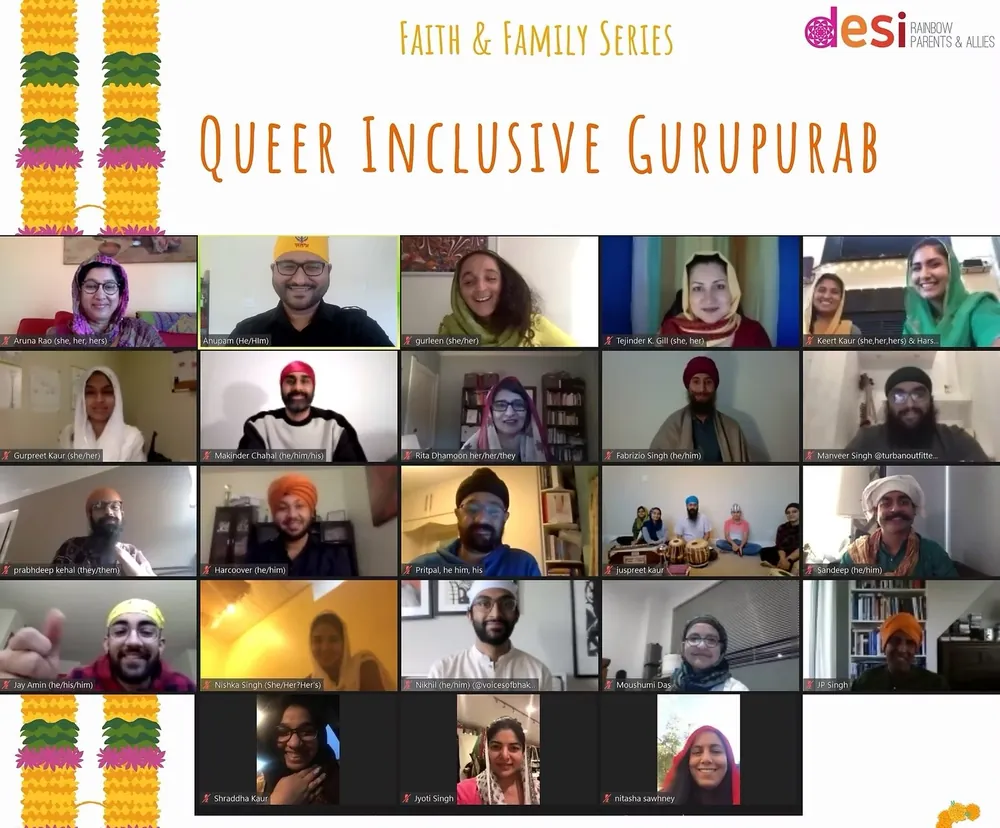
In the past, we have hosted Faith and Family discussions about how Faith can be inclusive of Queerness. We recently celebrated a Dussehra/Garba Gupshup. It was heartwarming, even emotional, to see Desi Families come together to celebrate with their Queer and Trans children of different ages. We even met an adorable 9 year old trans kid. We are soon celebrating a Queer Gurupurab and are in the planning phase for Queer Christmas and Queer Eid.
This is what Desi Rainbow is about: celebration of Queerness in the most Desi way, with pomp and show. It is about Desi Families coming together, giving comfort to one another with their sheer existence, providing support to one another through their shared and diverse lived experiences.
Remember, the Rainbow is full of different colors. A Rangoli is made up of many hues and shapes. Henna leaves a whole different spectrum of red-brown hues on each person. This difference or rather the celebration of this difference makes us beautiful and very Desi. Here is hoping for every Desi Family in the world to celebrate every Desi Festival in the most Queer and Trans Affirming, Inclusive, and Celebratory manner.
Desi Rainbow Parents & Allies calls for the passage of the Equality Act
Desi Rainbow Parents & Allies
Today, we call on the Senate to swiftly pass the Equality Act, a landmark nondiscrimination and civil rights bill that would update existing federal laws to protect people from discrimination based on their sexual orientation and gender identity.
70% of Americans support the Equality Act, indicating that it has broad and deep support across political party, demographics, and geography.
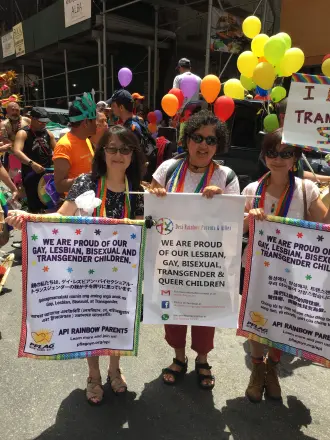
We are a national organization representing the voices of South Asian American families – parents, allies and LGBTQIA+ people. We want our children and loved ones to have equal rights so they can live free of discrimination.
These are some of our voices
Anitha Chennat: As a loving and proud parent of an LGBTQ+ child I urge the Senate to vote YES when the Equality Act comes to the floor. As a South Asian immigrant, I fear for the safety of my child and our chosen family of LGBTQ+ people in the State of Michigan. We ask that you stand with us as we fight against discrimination and fear.
Kalpana and Madhu: We look to our legislative representatives to support the Equality Act. We are the parents of a Transgender Daughter and we need equality for her in all aspects of life. Health, Employment and Safety are important to us. We are counting on you.
Mona Patel: I ask that the Senate pass the Equality Act for my son Joshua, who is a gay man. He has had to advocate for himself and for other LGBTQ+ community members. I support the Equality Act because I love him.
Why it is still needed
Opponents of LGBTQIA+ equality continue to file discriminatory bills in states across the country in an attempt to undermine existing protections in adoption, marriage and access to basic public services and businesses. The Equality Act would ensure that all LGBTQIA+ Americans can live, learn, work, play, and access public spaces free from discrimination, no matter what state they call home.
Although 21 states and more than 330 cities have passed LGBTQIA+ nondiscrimination protections, half of LGBTQIA+ people live in states that still lack comprehensive statewide laws.
LGBTQIA+ people have won critical victories in the fight against discrimination in this last year, both at the Supreme Court with the decision banning LGBTQIA+ discrimination in employment in Bostock v. Clayton County and with President Biden’s recent pro-LGBTQIA+ executive orders. The Equality Act is still needed in spite of these victories in order to achieve full protections in employment, housing, and public accommodations.
In 2019, the Equality Act was introduced in the House of Representatives. It passed the House on May 17, 2019 with a bipartisan 236-173 vote. It was not heard in the Senate.
In The News — all 46 press items from your current site, preserved. Links point back to this page in the prototype; wire them to the real URLs in the build.
In the news
Desi Rainbow in the press.
From CNN and Forbes to Brown Girl Magazine and the White House, the work of Desi Rainbow’s families is being heard.
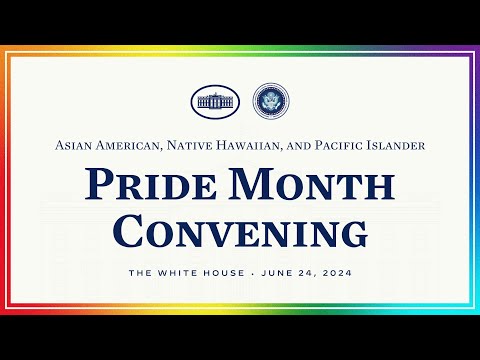
Sample — five items have previews (the White House video is pulled up from 2024 to show a video). Everything else is under “More coverage”, newest first, with dates, types and outlet names made consistent. Items in plain text have broken or unsafe links and are waiting on a keep/remove decision. In the full version, every item with a preview moves up top.
Desi Rainbow Parents & Allies PO Box 4454, 195 Central Ave Metuchen, NJ 08840
732-343-3015
Saathi peer support
Request a Saathi.
Saathi means friend. Tell us a little about yourself and we'll match you with a trained volunteer who has lived something similar. It's free, and you schedule the call when it suits you.
Graphic design, event coordination, video editing, translation, grant writing. Tell us what you’re good at, and one of our leaders will get in touch to chat about where it fits.
Hear about our advocacy efforts in real time, separate from the general newsletter. The Desi Rainbow Advocacy group is a grassroots coalition of LGBTQIA+ South Asians, their families and allies, organizing a response to legal, policy and social challenges to LGBTQIA+ rights.
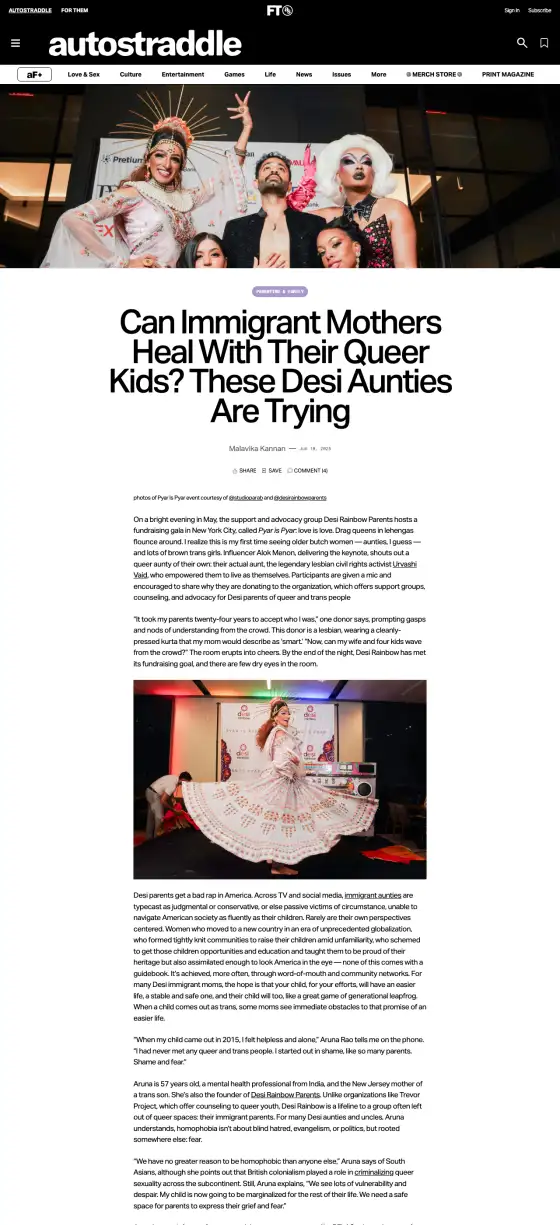
What your support made possible this year: support, outreach and advocacy, and celebration for South Asian LGBTQIA+ people and their families.
Tap the arrows or the edge of a page to turn it.
Page 1 of 7
Read the full report in plain text
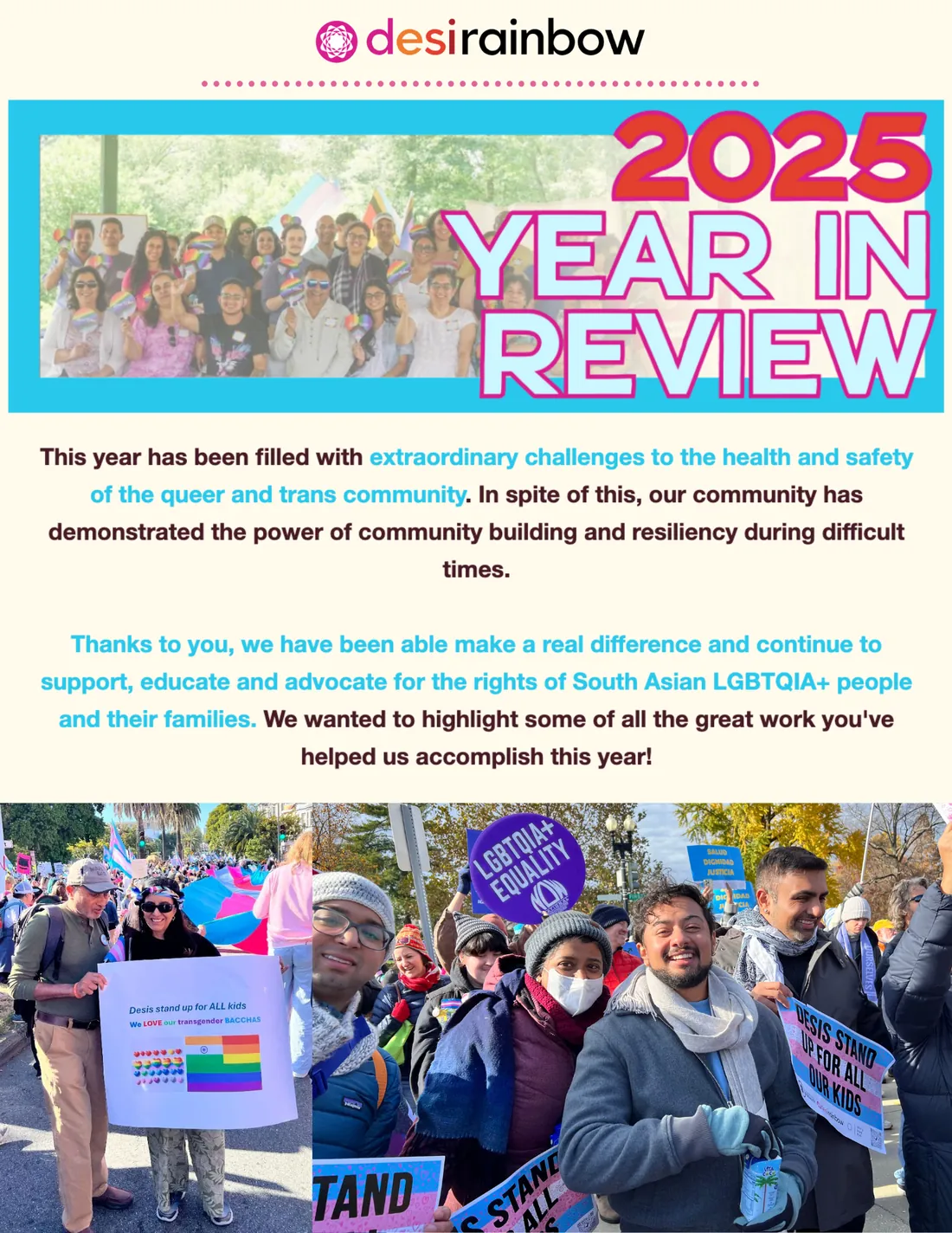
2025 Year in Review
This year has been filled with extraordinary challenges to the health and safety of the queer and trans community. In spite of this, our community has demonstrated the power of community building and resiliency during difficult times.
Thanks to you, we have been able to make a real difference and continue to support, educate and advocate for the rights of South Asian LGBTQIA+ people and their families. We wanted to highlight some of all the great work you’ve helped us accomplish this year!
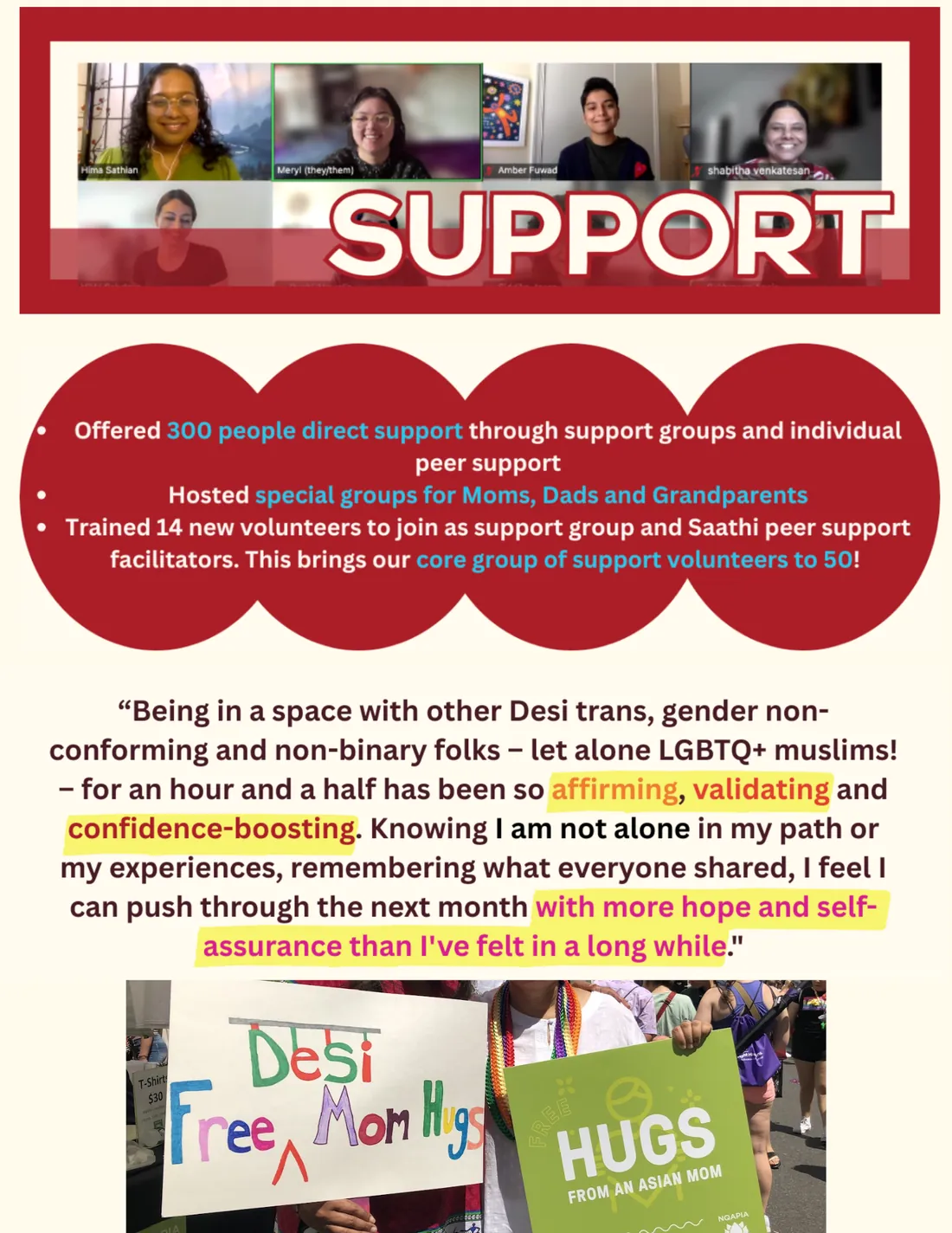
Support
Offered 300 people direct support through support groups and individual peer support.
Hosted special groups for Moms, Dads and Grandparents.
Trained 14 new volunteers to join as support group and Saathi peer support facilitators. This brings our core group of support volunteers to 50!
“Being in a space with other Desi trans, gender non-conforming and non-binary folks – let alone LGBTQ+ muslims! – for an hour and a half has been so affirming, validating and confidence-boosting. Knowing I am not alone in my path or my experiences, remembering what everyone shared, I feel I can push through the next month with more hope and self-assurance than I’ve felt in a long while.”
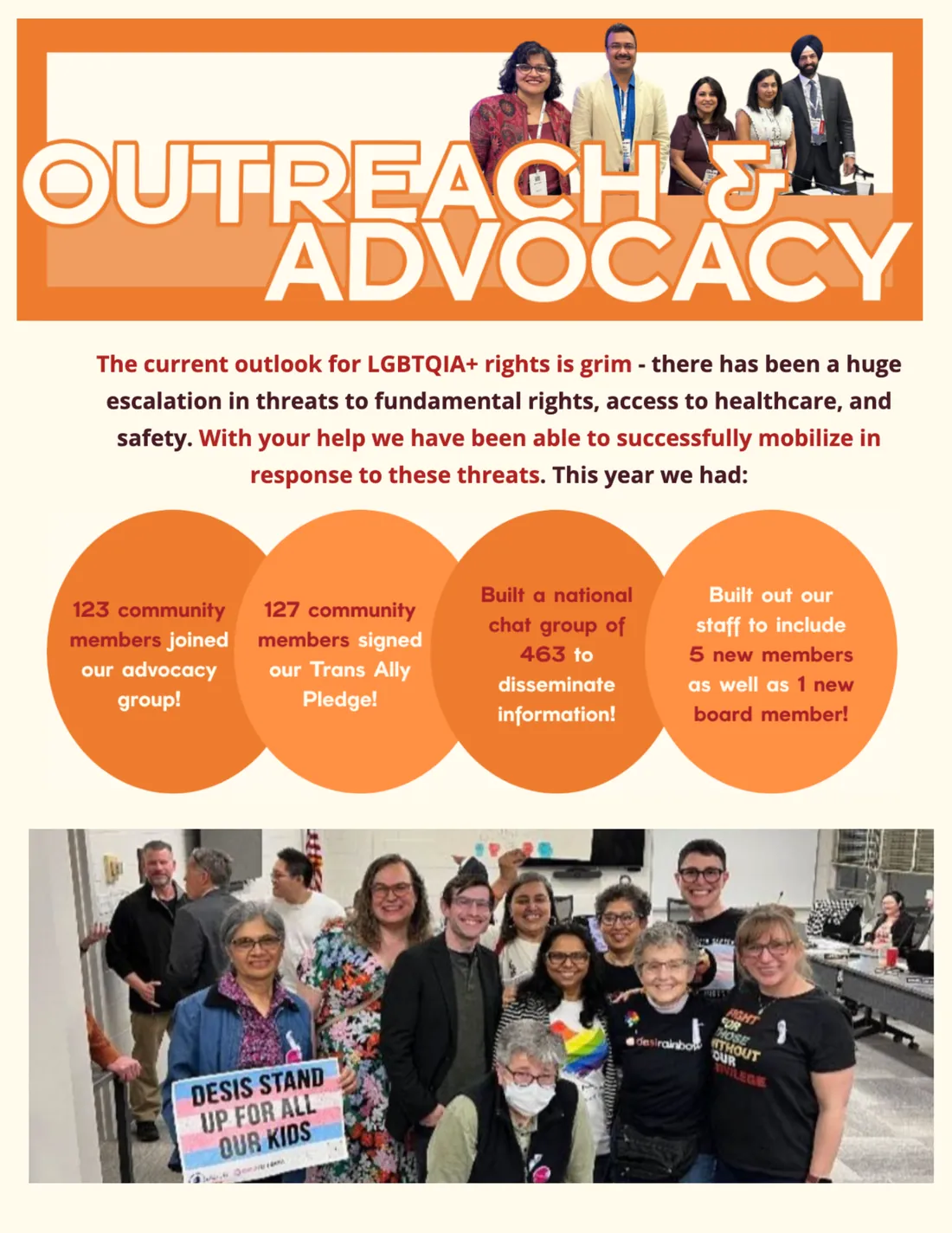
Outreach & Advocacy
The current outlook for LGBTQIA+ rights is grim: there has been a huge escalation in threats to fundamental rights, access to healthcare, and safety. With your help we have been able to successfully mobilize in response to these threats. This year we had:
123 community members joined our advocacy group.
127 community members signed our Trans Ally Pledge.
Built a national chat group of 463 to share information.
Built out our staff to include 5 new members, as well as 1 new board member.
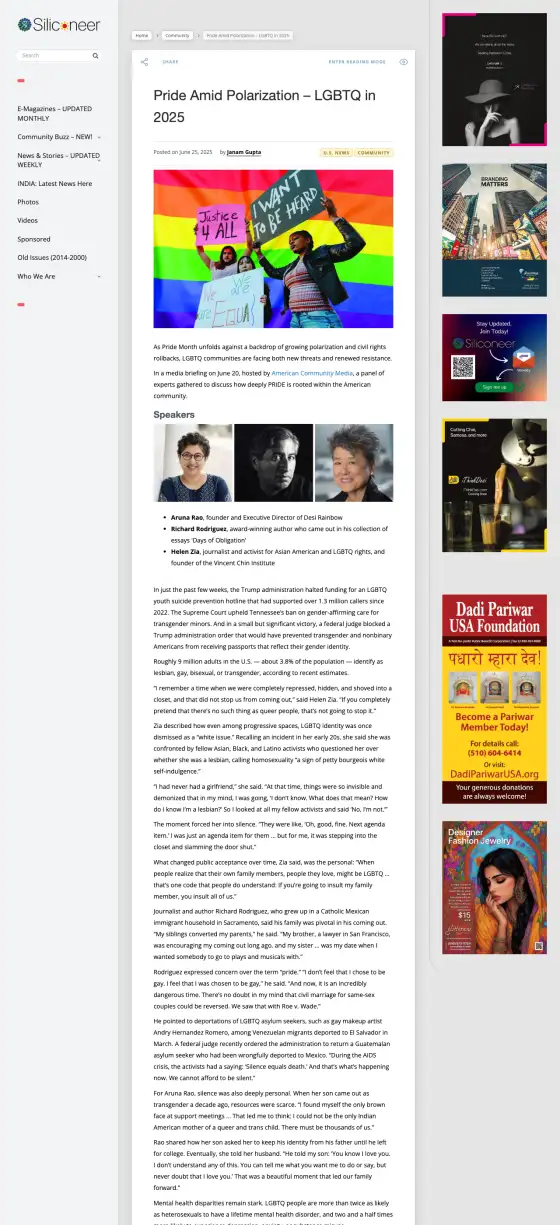
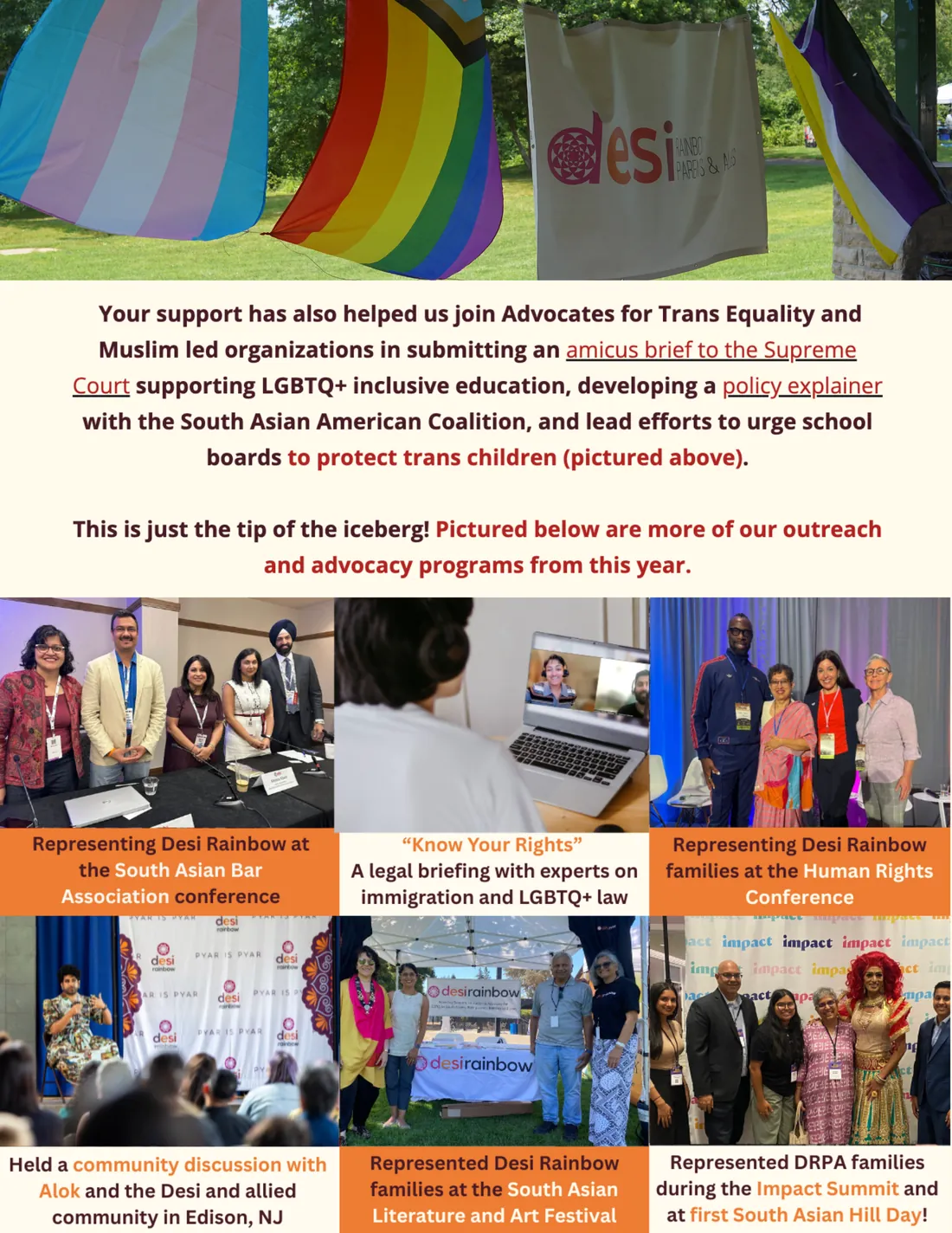
Your support has also helped us join Advocates for Trans Equality and Muslim-led organizations in submitting an amicus brief to the Supreme Court supporting LGBTQ+ inclusive education, develop a policy explainer with the South Asian American Coalition, and lead efforts to urge school boards to protect trans children.
This is just the tip of the iceberg! More of our outreach and advocacy from this year:
Representing Desi Rainbow at the South Asian Bar Association conference
“Know Your Rights”: a legal briefing with experts on immigration and LGBTQ+ law
Representing Desi Rainbow families at the Human Rights Conference
A community discussion with Alok and the Desi and allied community in Edison, NJ
Representing Desi Rainbow families at the South Asian Literature and Art Festival
Representing Desi Rainbow families at the Impact Summit and at the first South Asian Hill Day
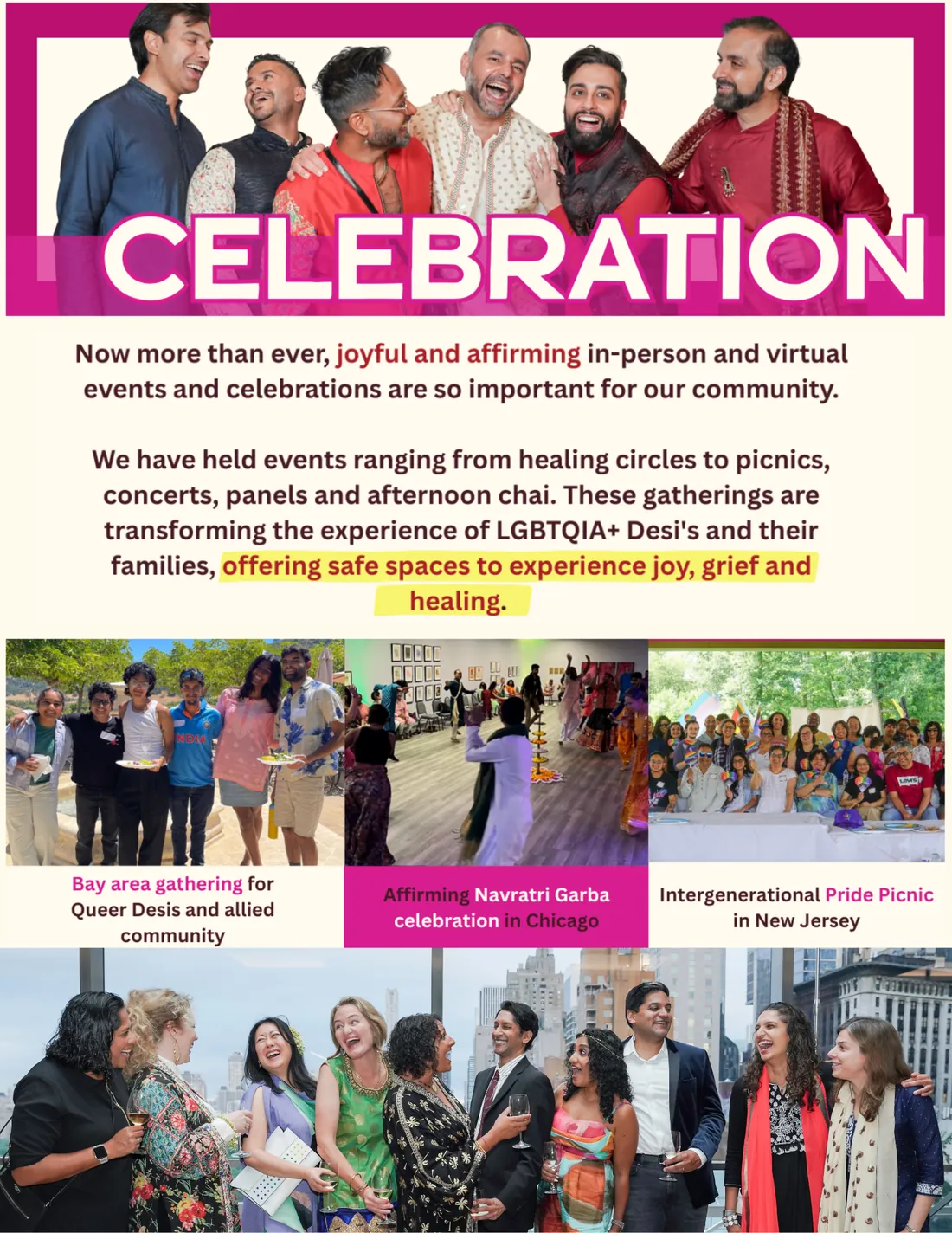
Celebration
Now more than ever, joyful and affirming in-person and virtual events and celebrations are so important for our community.
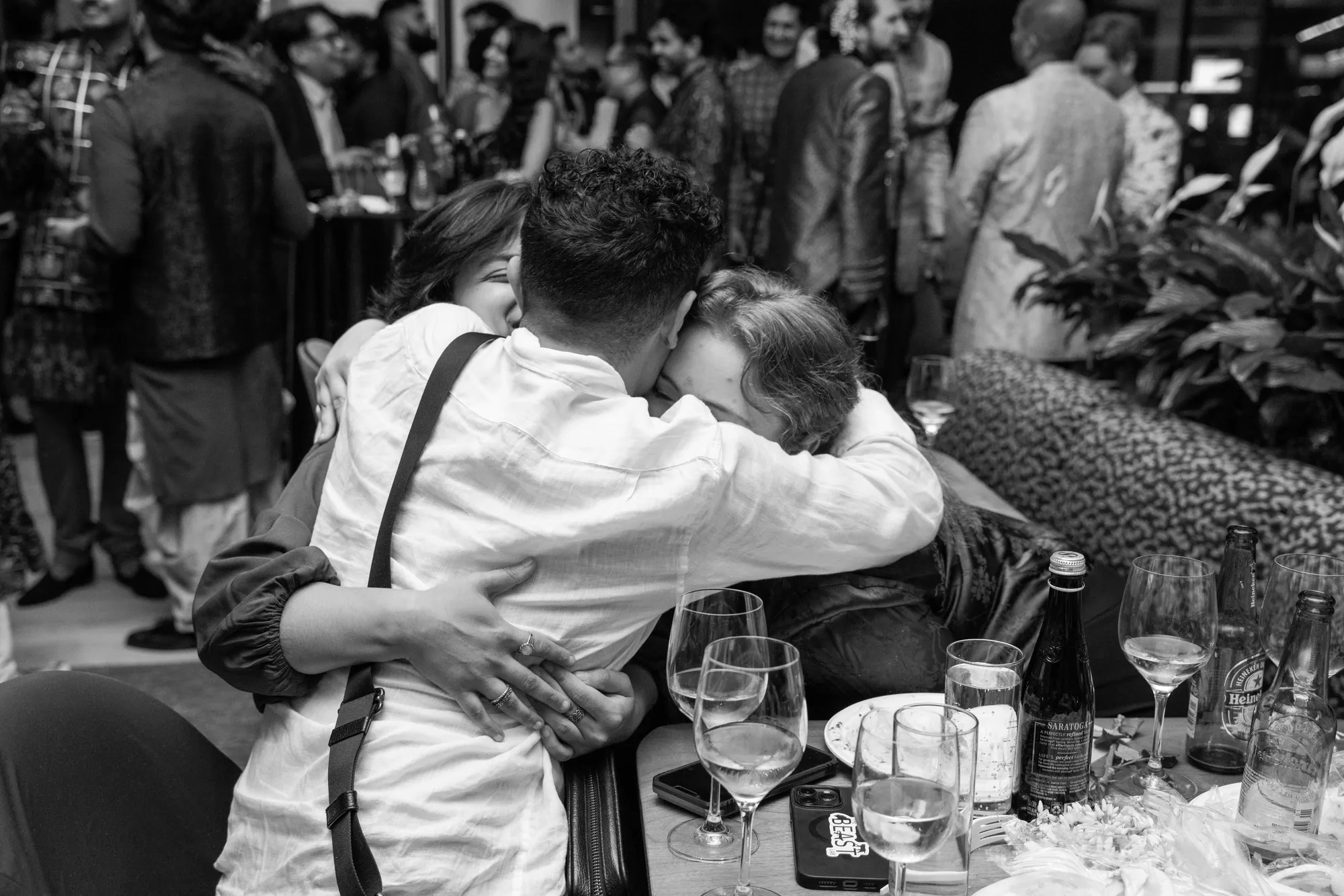
We have held events ranging from healing circles to picnics, concerts, panels and afternoon chai. These gatherings are transforming the experience of LGBTQIA+ Desis and their families, offering safe spaces to experience joy, grief and healing.
A Bay Area gathering for Queer Desis and allied community
An affirming Navratri Garba celebration in Chicago
An intergenerational Pride Picnic in New Jersey
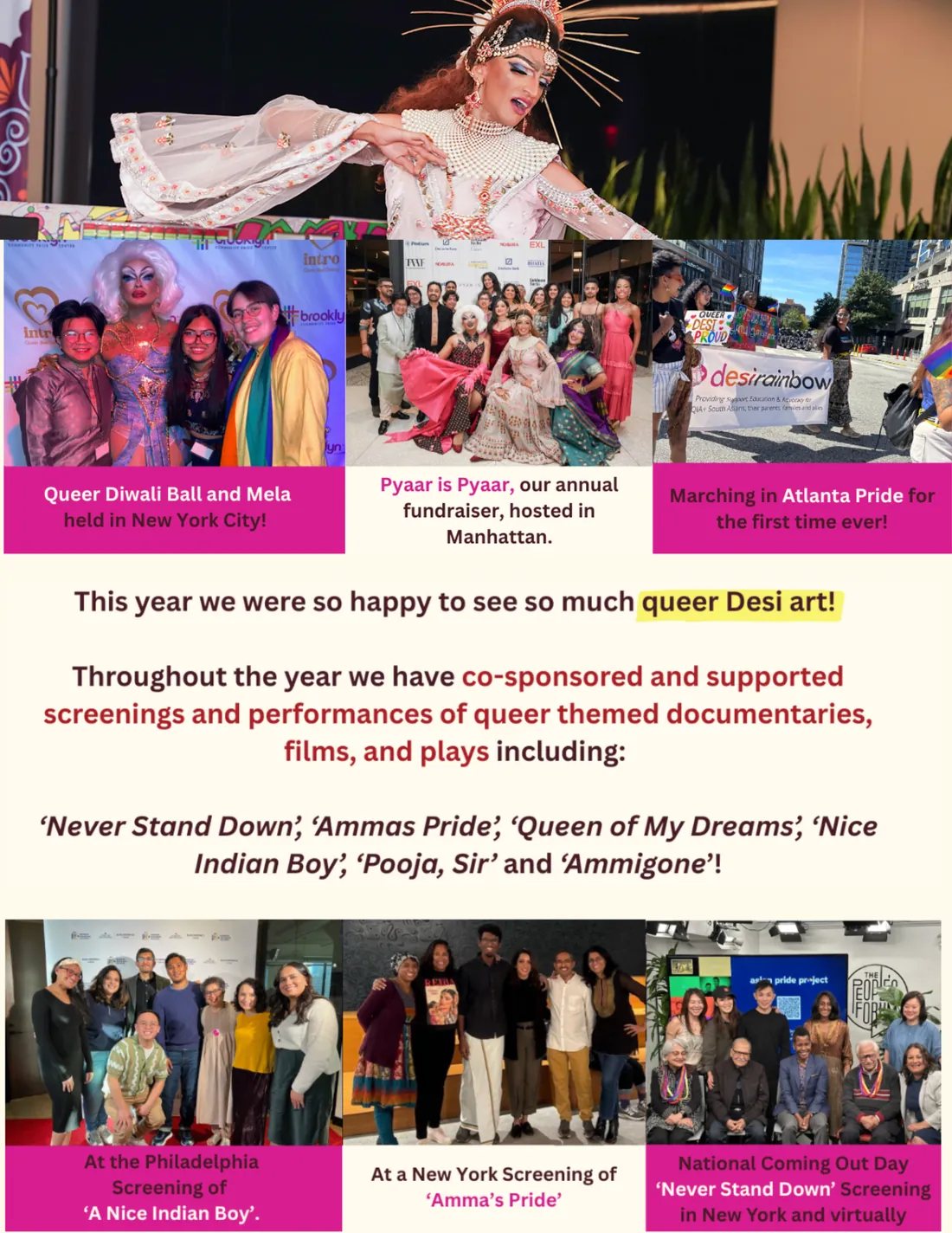
The Queer Diwali Ball and Mela in New York City
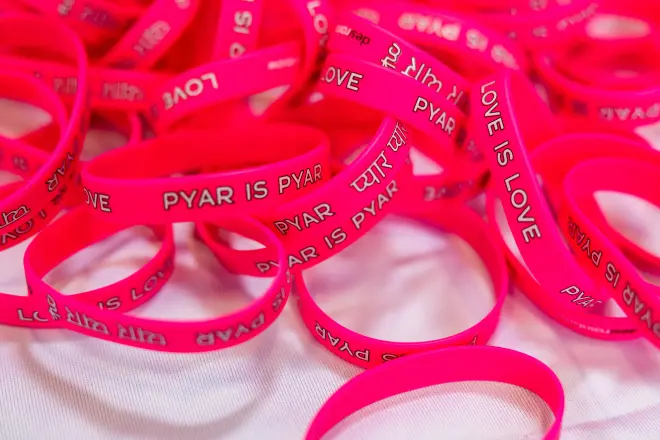
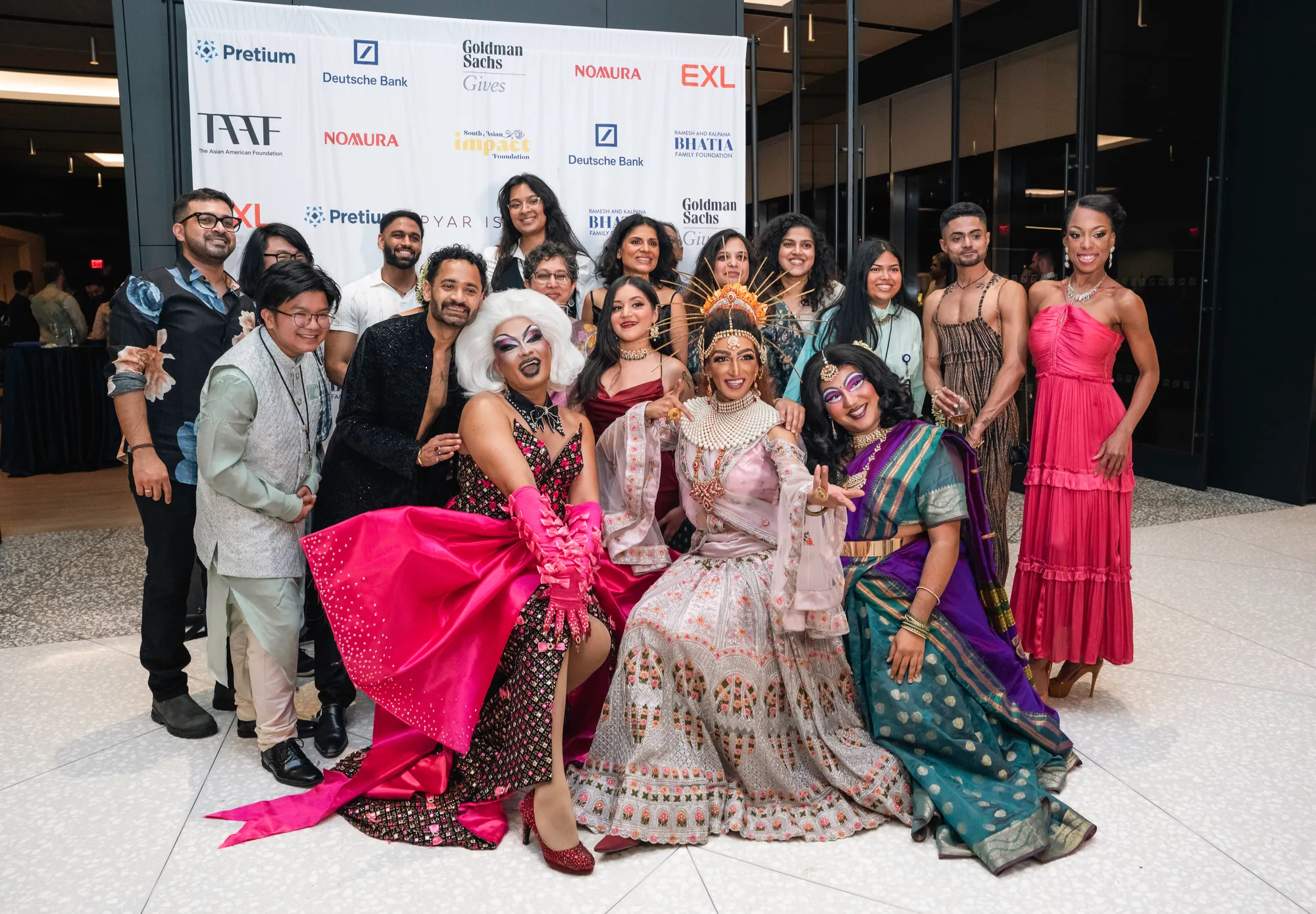
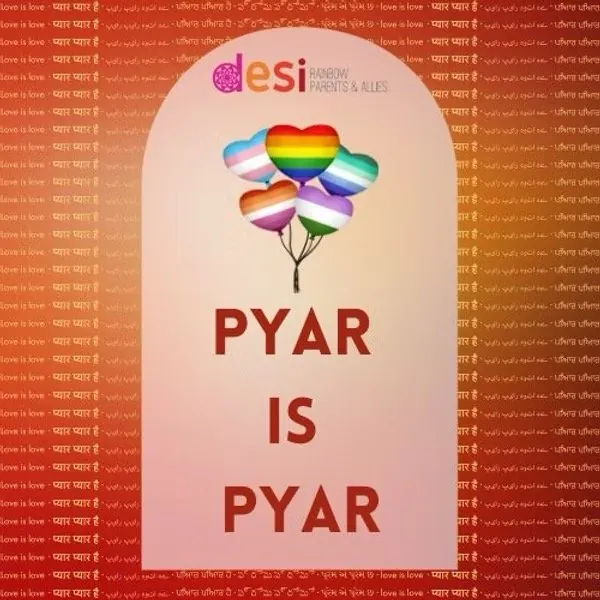
Pyaar is Pyaar, our annual fundraiser, hosted in Manhattan
Marching in Atlanta Pride for the first time ever
This year we were so happy to see so much queer Desi art! Throughout the year we co-sponsored and supported screenings and performances of queer-themed documentaries, films and plays, including Never Stand Down, Amma’s Pride, Queen of My Dreams, A Nice Indian Boy, Pooja, Sir and Ammigone. We were at the Philadelphia screening of A Nice Indian Boy, a New York screening of Amma’s Pride, and a National Coming Out Day screening of Never Stand Down in New York and online.
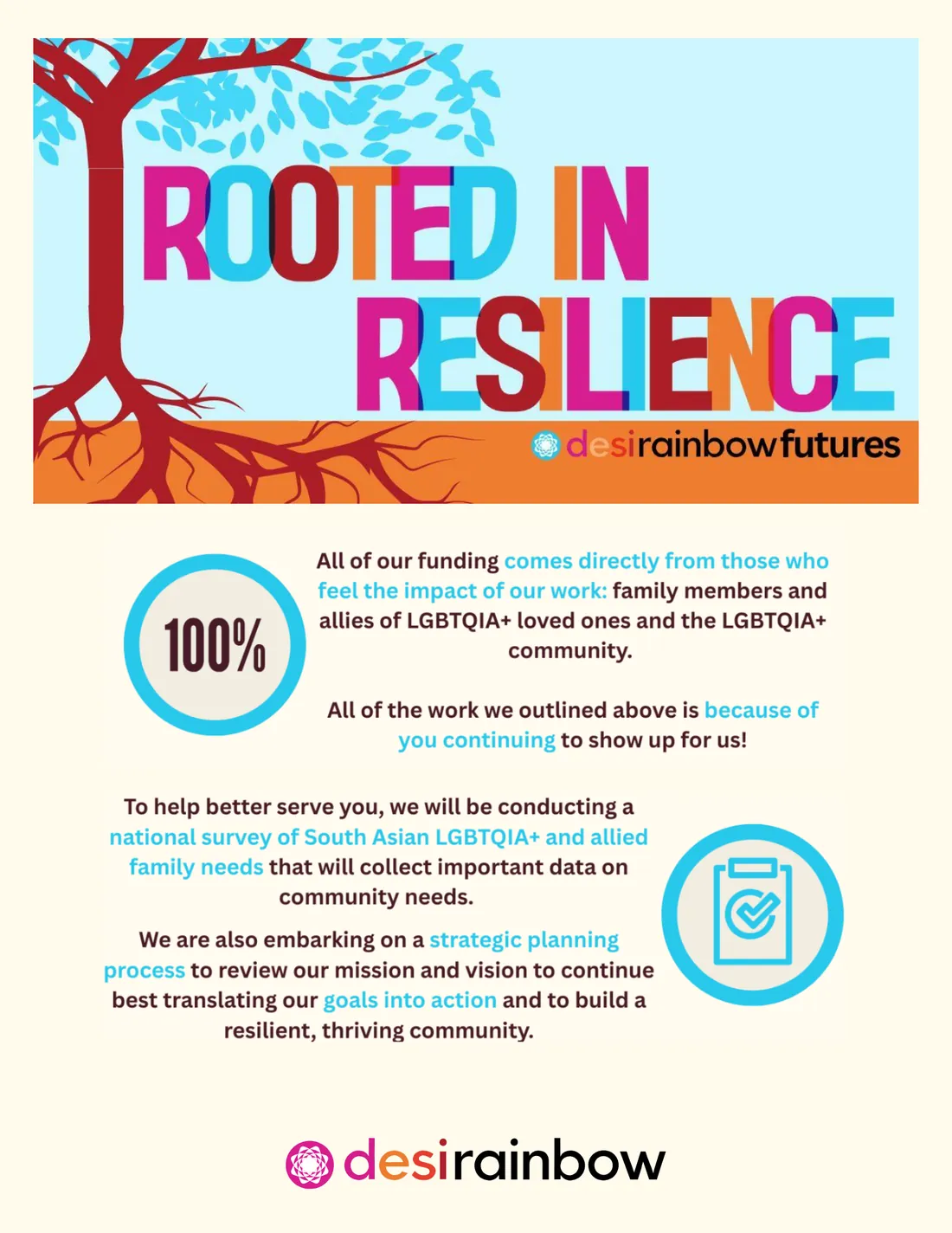
Rooted in Resilience: Desi Rainbow Futures
100% of our funding comes directly from those who feel the impact of our work: family members and allies of LGBTQIA+ loved ones and the LGBTQIA+ community. All of the work outlined above is because of you continuing to show up for us!
To help better serve you, we will be conducting a national survey of South Asian LGBTQIA+ and allied family needs that will collect important data on community needs.
We are also embarking on a strategic planning process to review our mission and vision, to continue translating our goals into action, and to build a resilient, thriving community.
Candid Gold Transparency
Desi Rainbow Parents & Allies Inc. is a federally recognized 501(c)(3); EIN 85-3352073.
Support page — flyer images demoted to decoration; all dates and times are real text. Card heights equalized; body copy left-aligned, regular weight.
Support
You don't have to do this on your own.
Two free monthly groups and one-to-one peer support. Our programs currently serve people living in North America / on Turtle Island.
LGBTQIA+ Support Group
First Tuesday, every month
9pm ET / 8pm CT / 6pm PT
By and for South Asians who identify as LGBTQIA+. Peer-to-peer discussion on family acceptance, with guest accepting parents who listen and share their own journeys.
LGBTQIA+ people need support when their family does not understand or affirm their identity — a peer, or an aunty or uncle, who will listen and give them room to hold both pride in who they are and grief for the family and community support they've lost. This group is for adults over 18.
Parents and family members at all acceptance stages welcome. A space to ask questions and express grief, anger or confusion without fear of shaming.
Families need support to navigate the complicated journey toward accepting and affirming their child's identity — and support as cisgender, straight people learning about LGBTQIA+ identity for the first time.
Saathi means friend. Sometimes we all need one to listen to our concerns, reassure us, and offer a hand with information and support — and for Desi LGBTQIA+ people and their families, that isn't easy to find.
You're matched with a trained volunteer who has lived something similar — an LGBTQIA+ Desi, or a parent or family member of one — and you schedule a call when it suits you. They listen, support, and offer referrals.
Desi Rainbow provides a supportive and affirming space for South Asian LGBTQIA+ people and their families to talk about family relationships and learn about gender identity and sexual orientation.
Our groups are peer-led by volunteers who are themselves LGBTQIA+ or parents and allies. Guest experts are sometimes invited to speak on particular topics, but we do not give advice or medical information. Topics vary; the focus is on learning to support and affirm your child or loved one. Our groups are life-changing for many people — and they are not a substitute for professional mental health care.
What people tell us
Saathi peer support
100%
of Saathi recipients agree or strongly agree that:
they would recommend Saathi to a friend or family member
speaking to a Saathi made them feel better
their Saathi was kind and compassionate
they feel better prepared to address their challenges after speaking to a Saathi
Support groups
“Just witnessing and being in a space with other desi trans, gender non-conforming and non-binary folks — let alone LGBTQ+ Muslims! — for an hour and a half has been so affirming, validating and confidence-boosting, I feel like my anxiety and depression have decreased greatly. Knowing I am not alone in my path or my experiences, remembering all the folks in group and what everyone shared, I feel I can push through the next month with more hope and self-assurance than I've felt in a long while.”— Support group member
From Desi Rainbow's 2024 participant surveys.
FAQ folded in here — the standalone FAQ page held five collapsed lines and nothing else. First answer opens by default so the section has substance on arrival.
Common questions
How do I join a support group, and how do I get the Zoom link?
Register once on the form for your group — LGBTQIA+ group (for LGBTQIA+ people) or Family group (for family members).
Once your registration is processed you'll get an email about being added to the Google Group — our support group mailing list. Thanks for your patience while we process it.
Depending on when you're added, you'll then get an email with the Zoom details — look for the highlighted link — one week, one day, and one hour before the group.
Register on Zoom for each meeting you plan to attend.
You only fill in the registration form once. After that, come whenever you can.
What if the meeting time doesn't work for me?
Request a Saathi instead — one-to-one peer support scheduled around your availability. You can also join our WhatsApp community for regional groups, or start a chapter where you live.
Stay in the loop. Join the mailing list and we'll send meeting reminders, recordings and one-off events.
Not yet. We're mostly volunteer-run and our capacity is limited. Our support programs currently serve people living in North America / on Turtle Island. If you're elsewhere, our resources page lists organizations better placed to help.
How can I support Desi Rainbow's work?
Desi Rainbow depends entirely on individual donors like you. To make a one-time or recurring gift, visit our donate page — your employer may match it.
Become a member. Membership brings early access to event tickets, special rates on major events such as Pyar is Pyar, member-only events, our regional and identity-based WhatsApp community, recordings of educational presentations and speakers, and swag — t-shirts, pins and bracelets. A fee waiver is linked in the membership form for anyone experiencing financial hardship.
Become a fundraiser by sharing our Fifth Anniversary campaign with your communities. And volunteering is another great way to help — from graphic design to event coordination, or training as a peer supporter.
What We Do — the old Education page was ~40 identical cards all labeled "Click Here." Split into three named programs, each with a few featured items and an archive link. Every button says what it does and how long it takes.
What we do
Films, celebrations and conversations.
The Desi community often meets LGBTQIA+ identity with shame and silence. We answer with visible, joyful proof that another response is possible.
Proud Possibilities
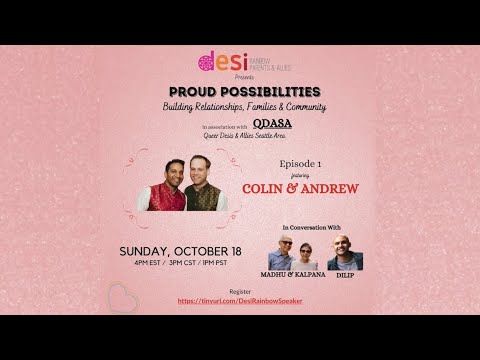
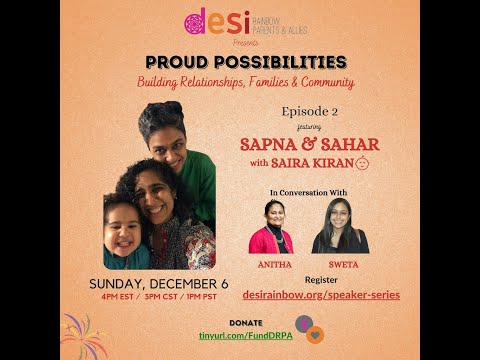
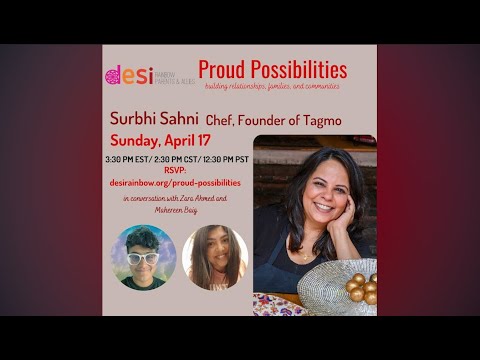
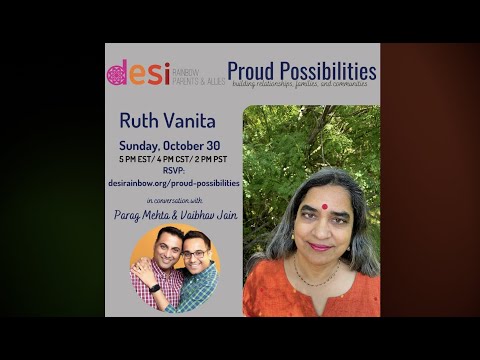
Activist Laverne Cox preferred "possibility model" to "role model." These are conversations with LGBTQIA+ Desis building relationships, families and communities — so parents can picture their own child's future.
Festivals can be the loneliest time of year for LGBTQIA+ Desis and their families. We host affirming celebrations across every South Asian faith, with leaders who welcome people as they are.
Every group facilitator, every Saathi, every person who edits a film is someone who decided this should exist. There's room for you.
Become a member
We are the only organization in the United States providing a voice and forum for this national, intergenerational and allied community. Members get early access to event tickets, special rates on major events such as Pyar is Pyar, member-only events, our regional and identity-based WhatsApp community, recordings of educational presentations, and swag.
Experiencing financial hardship? A fee waiver is linked in the membership form, or email info@desirainbow.org. No questions asked.
We train Saathis and support group facilitators ourselves, free, on a rolling basis. You need lived experience — as an LGBTQIA+ Desi or as a family member — and the patience to listen.
Join an existing affinity or regional group through our WhatsApp community — or organize meetups and events where you live, and we'll help you get going.
Membership is required before joining the WhatsApp community.
Social media management and engagement — designing posts, posting to a schedule, and shaping the strategy and themes that build our presence.
Qualifications: experience running social campaigns across platforms, designing posts, and growing an audience. To apply: samples of your work and two references.
Resources — crisis lines lifted into a high-contrast box at the top, numbers set large and marked up as tel: links so they dial on a tap. Everything else grouped into scannable lists. No raw URLs.
Need to talk to someone right now?
These lines are free, confidential, and open to everyone. Tap a number to call.
South Asian Legal Defense FundAttorneys and litigation addressing injustice, for direct-service nonprofits.Visit SALDF
Know an affirming therapist?
Culturally competent, affirming providers are genuinely hard for our community to find. If someone helped you, tell us — we're building a referral list to share with anyone who asks. Providers are welcome to add themselves.
Our Team — photo slots are marked because the photographs are the one thing I can't produce. Bios set in regular weight, not italic. Job titles no longer underlined. "Recruiting" moved out of the grid into a single card at the end.
Our team
The people who'll be in the room.
We started with one person running community calls. We're now a group of parents, LGBTQIA+ people, siblings, aunts and uncles who decided this should exist. Each person brings their own perspective to the mission — get in touch if you'd like to join us.
Staff
Photo goes here
Aruna
Executive Director
(she, her, hers)
Founded Desi Rainbow after a 20-year career in mental health advocacy focused on immigrant families. Proud parent of a transgender son.
Photo goes here
Meryl
Program Manager
(they/them)
Came to Desi Rainbow in 2021 seeking support bridging their identities — Assamese, Muslim, American, queer, transgender and nonbinary.
Photo goes here
Hima
Saathi Peer Support Coordinator
(they, them, theirs)
A social worker by training, currently a trauma counselor at a crime victims center in Pennsylvania. Proud of their Malayali roots.
Photo goes here
Shaila
Records and Finance
(she, her, hers)
Emigrated to the U.S. from Bengaluru and lives in New Jersey with her husband. Mother of two. Eight years on the Board of Trustees of Guruvaayoorappan Temple in Marlboro, NJ, and a long history of volunteer leadership — walk-a-thons, education and social services. She enjoys traveling and reading.
Photo goes here
Darshni
Communications Manager
Photo goes here
Ekta
Mental Health Advisor
(she/her)
A licensed clinical psychologist at USC and Director of Diversity, Equity and Inclusion for its Department of Psychiatry. Passionate about providing an affirming therapeutic space for LGBTQIA+ folks and families.
Board
Photo goes here
Rayman
Chair
(she, her, hers)
A Sikh-American lesbian, multi-time CEO, social entrepreneur and community activist who has served on corporate and community boards.
Photo goes here
Mridula
Board Member
(she/her)
Professor Emeritus of Sociology at CSUS, with long experience in higher education and nonprofit work in the US and India.
Neeraja
Board Member
Holds a PhD in Sociology and directs a university community engagement center. Believes centering our response in love is a powerful counter to the current moment.
Photo goes here
Anupam
Board Member
(he, him, his)
An IIT Delhi graduate, Indian small-towner and first-generation immigrant who dreams of a more accessible and accepting world.
Open seat
Join our board
Board Member
We're recruiting. If you've read this far and recognized yourself, we'd like to hear from you.
Open seat
Join our board
Treasurer
We're recruiting for this role too — the finance seat on the board.
Donate — Candid seal given its own line instead of crowding the headline. Legal disclosure set small and gray; it's required text, not important text.
Donate
Your gift keeps this work going.
Desi Rainbow depends entirely on individual donors like you to sustain our programming.
Ways to give
We are a federally recognized non-profit 501(c)(3) organization and all donations are tax exempt. We also accept donations through employee-match programs.
We accept credit card, Venmo, PayPal and bank transfers via GiveButter.
We are grateful for all our Supporters!
We accept card, Venmo, PayPal and bank transfer through GiveButter. Many employers will match your gift — it's worth asking.
To mail a check: Desi Rainbow Parents & Allies, PO Box 4454, 195 Central Ave, Metuchen, NJ 08840
Choose an amount
Powered by Givebutter · card, Venmo, PayPal and bank transfer accepted
Desi Rainbow Parents & Allies Inc. is a federally recognized 501(c)(3); EIN 85-3352073. Financial and other information about our charity's purpose, programs and activities can be obtained by contacting Aruna Rao, Executive Director, 195 Central Ave #4454, Metuchen, NJ 08840, 732-343-3015. Contributions are deductible for federal income tax purposes in accordance with applicable law. Registration in a state does not imply endorsement, approval or recommendation by the state.